Friday, 26 April 2019

Debenhams names 22 stores to close

Business correspondent(wp/reuters):::
Debenhams has named 22 of the 50 stores it plans to close as part of a plan by new owners to revive the department store chain.
The retailer says the store closures will start next year and 1,200 staff will be affected by the first phase.
Stores in Canterbury, Guildford, Wolverhampton and Kirkcaldy are among those earmarked for closure.
Earlier this month lenders to Debenhams took control in a deal which wiped out the investments of shareholders.
Once the 50 store closures are complete Debenhams will have around 116 stores in the UK.
Debenhams also reported results for the 26 weeks to March. Sales at its UK stores fell 7.4%, which it blamed on fewer shoppers heading to the High Street.

Debenhams stores to close in 2020

Altrincham
Ashford
Birmingham Fort
Canterbury
Chatham
Eastbourne
Folkestone
Great Yarmouth
Guildford
Kirkcaldy
Orpington
Slough
Southport
Southsea
Staines
Stockton-on-Tees
Walton-on-Thames
Wandsworth
Welwyn Garden City
Wimbledon
Witney
Wolverhampton
Source: Debenhams

What has gone wrong at Debenhams?

Debenhams is the UK's biggest department store chain and its origins can be traced back to 1778 and a drapers store in central London.
However, industry experts said the retailer expanded the number of its stores at the wrong time - in the 2000s when customers were switching to online sales.
The expansion left the company with debts and expensive leases.
The firm's financial situation deteriorated and last month Debenhams agreed a deal with its lenders, who provided £200m of fresh funding.
Those lenders then took control of Debenhams earlier this month by buying it out of administration.
That deal wiped out the investments of shareholders, including the stake of Mike Ashley, the founder of Sports Direct.
Mr Ashley had wanted to buy Debenhams and become chief executive, but his approaches were turned down.

What does Debenhams say about its other stores?

The new owners have now announced their store closure programme under a process known as a Company Voluntary Arrangement (CVA), which also allows them to renegotiate rents at stores that remain open.
Terry Duddy, Debenhams executive chairman, said: "Debenhams has a clear strategy and a bright future, but in order for the business to prosper, we need to restructure the group's store portfolio and its balance sheet, which are not appropriate for today's much changed retail environment.
"Our priority is to save as many stores and as many jobs as we can, while making the business fit for the future."
Debenhams is just one of many High Street chains to run into trouble in recent years.
The collapse of BHS in 2016 resulted in more than 160 stores closing, and House of Fraser has been shutting stores after being bought out of administration last year.
Marks and Spencer is in the process of closing 100 stores by 2020.

A speech by The Duke of Cambridge at Al Noor Mosque, Christchurch, New Zealand

Tena Koutou katoa, mai Te Whare Ariki o te Kuini
As-Salam Alaykum.
Good morning. Today we gather in a place of worship, faith, and friendship. We gather here in Al Noor mosque, a home for community and for family.
On the 15th of March, tragedy unfolded in this room.
A terrorist attempted to sow division and hatred in a place that stands for togetherness and selflessness. He thought he could redefine what this space was.
I am here to help you show the world that he failed.
Now, when I woke up in London on the morning of 15th of March, I could not believe the news. 
An act of unspeakable hate had unfolded in New Zealand – a country of peace. 
And it had unfolded in Christchurch – a city that has endured so much more than its fair share of hardship.
And when it was confirmed that 50 New Zealand Muslims had been killed – murdered while peacefully worshiping – again, I just could not believe the news.
I have been visiting New Zealand since before I could walk. 
I have stood alongside New Zealanders in moments of joy and celebration. 
And I have stood alongside New Zealanders in this city in moments of real pain, after loved ones, homes, and livelihoods had been lost after the 2011 earthquake.
And what I have known of New Zealanders from the earliest moments of my life, is that you are a people who look out to the world with optimism. You have a famous strength of character. You have a warm-hearted interest about cultures, religion, and people thousands of miles from your shores. 
You acknowledge, debate, and grapple with your own cultural history in a way that has no real parallel in any other nation. 
So again, I could not believe the news I was hearing on the 15th of March. 
A country that seemed to be bucking global trends of division and anger, looked like maybe it too would fall victim to those intent on promoting fear and distrust. I have no doubt that this is what the terrorist had hoped for.
But New Zealanders had other plans. 
The people of Al Noor and Linwood mosques had other plans.
In a moment of acute pain, you stood up and you stood together. And in reaction to tragedy, you achieved something remarkable.
I have had reasons myself to reflect on grief and sudden pain and loss in my own life. And in my role, I have often seen up close the sorrow of others in moments of tragedy, as I have today.
What I have realised is that of course grief can change your outlook. You don’t ever forget the shock, the sadness, and the pain. 
But I do not believe that grief changes who you are. Grief – if you let it – will reveal who you are. 
It can reveal depths that you did not know you had. 
The startling weight of grief can burst any bubble of complacency in how you live your life, and help you to live up to the values you espouse.
This is exactly what happened here in Christchurch on the 15th of March. 
An act of violence was designed to change New Zealand. But instead, the grief of a nation revealed just how deep your wells of empathy, compassion, warmth, and love truly run. 
You started showing what New Zealand really was almost immediately. On the road outside these walls people pulled their cars over and started caring for the victims even when they did not know if it was safe to do so. Your neighbours opened their doors to those who were fleeing the violence.
Your first responders apprehended the killer and immediately worked to save lives in the most challenging of circumstances.
In the days that followed, thousands of bouquets of flowers filled public spaces in this city, brightening the darkest of moments.
Your Prime Minister showed extraordinary leadership of compassion and resolve, providing an example to us all.
Imam Gamal Fouda - you displayed wisdom and grace that is almost unthinkable given what you witnessed with your own eyes. Your words in the days after the attack moved the world. 
Your reminder that the victims needed to be remembered both as Muslims and as New Zealanders, showed that grief revealed you to be a man of great wisdom. 
You could not have been more right when you declared that this country is unbreakable.
On the map New Zealand may look like an isolated land. But in the weeks that followed the 15th of March, the moral compass of the world was centred here in Christchurch. 
You showed the way we must respond to hate – with love.
You showed that when a particular community is targeted with prejudice and violence, simple acts – like wearing a headscarf or broadcasting the call to prayer – can reassure those who have reason to be afraid.
You showed that an attack designed to divide a society against Muslims only brought us all closer to our Muslim friends. 
The Muslim community showed the world the true face of Islam as a religion of peace and understanding. 
I was very moved by the stories of the great distances that your friends and families travelled to support you in your time of need, even when your previous connections had not always been frequent. They travelled here to support you because you were family and that is what families do. They drop everything when it is needed. 
People of all faiths and backgrounds can learn a great deal from how the Muslim families affected by the 15th of March attacks rallied around their loved ones.
The example provided by New Zealand will prove to be of enduring value to all nations. What happened here was fuelled by a warped ideology that knows no boundaries. The world has rightly united to fight the extremism that has made sorrowful brethren out of cities like New York, Paris, London, and Manchester and that has taken so many lives in Sri Lanka in recent days. 
And so too we must unite to fight the violent brand of extremism that has led to fatal shootings in a church in Charleston, South Carolina and a synagogue in Pittsburgh, Pennsylvania; a van attack on the streets of Finsbury Park in London; the murder of an MP in West Yorkshire; and now so many deaths in two mosques here in Christchurch. 
Extremism in all its forms must be defeated. 
The message from Christchurch and the message from Al Noor and Linwood mosques could not be more clear - the global ideology of hate will fail to divide us.
And just as New Zealand has taken swift action to ban physical tools of violence, we must unite to reform the social technology that allowed hateful propaganda to inspire the murder of innocents. 
To the people of New Zealand and the people of Christchurch – to our Muslim community and all those who have rallied to your side – I stand with you in gratitude for what you have taught the world these past weeks. 
I stand with you in optimism about the future of this great city. 
I stand with you in grief for those we have lost, and with support for those who survived.
And I stand with you in firm belief that the forces of love will always prevail over the forces of hate. — 
No reira, kia kaha, Arohanui
Tena Koutou
Tena Koutou
Tena tatou katoa
Shukran. Salam.

ROYAL PRESS-LONDON,ENGLAND

Thursday, 25 April 2019

Huawei 5G row: Government 'cannot exclude' criminal investigation

WT Special Report(wp/bbc):::
The government "cannot exclude" a criminal investigation into leaks from a National Security Council meeting.
Culture Secretary Jeremy Wright condemned leaks to the Daily Telegraph from the meeting about using Huawei technology for the UK's 5G network.
Ex-Defence Secretary Sir Michael Fallon said the matter was "too serious" for a standard leaks inquiry and said the police must be called in.
The National Security Council is made up of senior cabinet ministers.
Chaired by the prime minister, it meets weekly to discuss government objectives concerning national security - with other ministers, officials, and senior figures from the armed forces and intelligence invited when needed.
Former National Security Adviser Lord Ricketts told the BBC it was the first time anyone had committed a major leak from the NSC since its inception in 2010.
He said he was in favour of a full inquiry, possibly involving MI5 investigators, "to make the culprit feel very uncomfortable".
And Sir Michael, who was defence secretary between 2014 and 2017, said everyone who was at the meeting should be subject to a "proper Scotland Yard investigation", saying the leak was "completely shocking" and it was an "offence to divulge secret information from the most secret of all government bodies, which is the National Security Council".
"It needs to be stopped and the only way to stop it is to investigate it thoroughly," he said.
BBC security correspondent Gordon Corera said he understood an inquiry was being carried out by the government into the leak.
Theresa May's official spokesman declined to confirm this, but said: "The prime minister is clear that the protection of information on matters of national security is of the highest importance."
Earlier Jeremy Wright told MPs: "We cannot exclude the possibility of a criminal investigation here and everyone will want to take seriously that suggestion."
He said that security officials "need to feel they can give advice to ministers, which ministers will treat seriously and keep private, and if they do not feel that they will not give us that advice and government will be worse as a result".
Former Attorney General Dominic Grieve said if a minister was responsible "they should be sacked immediately". The Conservative MP said there had been "some posturing around on a whole range of issues" and members of his party "preparing themselves for leadership bids".
But he said some ministers had behaved "outrageously badly" due to the breakdown of collective responsibility in cabinet.
The members of the National Security Council include the prime minister, home secretary, foreign secretary, and defence secretary, among others.

What was the leak about?

Ministers were deciding whether or not to allow equipment from Huawei to be used to construct the new 5G data network - a decision that could have long-term consequences for national security.
There are fears that giving the Chinese company a key role could open the UK network to espionage.
But Huawei has denied there is any risk of spying or sabotage, or that it is controlled by the Chinese government.
According to the Daily Telegraph, Huawei would be allowed to help build the "non-core" parts of the UK's 5G network, such as antennas.
There has been no formal confirmation of Huawei's role in the 5G network and No 10 said a final decision would be made at the end of spring.
The leak from Tuesday's National Security Committee meeting is both serious and unprecedented.
Lord Ricketts, a former National Security Adviser in David Cameron's government, confirmed there had never before been a "major, deliberate leak" immediately following an NSC meeting.
He is in favour of a formal investigation while others go further, calling for a criminal inquiry involving the police and MI5.
So, just why is it so serious?
Because the NSC is supposed to be the one place in Whitehall where highly sensitive secret intelligence can be openly shared with ministers.
Those present will have signed the Official Secrets Act, clearing them to handle secret intelligence.
Breaking that "circle of trust" risks undermining the work of Britain's three intelligence agencies - GCHQ, MI5 and MI6 - potentially putting agents in danger.
Historically, leak inquiries rarely find the culprit, although in this case there may be an electronic trail that would expose the leaker.
What they will do, however, says Lord Ricketts, is to put the fear of God up the culprit, thereby discouraging them from ever doing it again.
Presentational grey line

Why are people worried about Huawei?

There have been warnings in the US since at least 2012 that equipment from Huawei poses a security threat.
Last year a UK government report said it could provide "only limited assurance" that the company's infrastructure did not pose a threat to national security.
Now the US wants its allies in the "Five Eyes" intelligence grouping - the UK, Canada, Australia and New Zealand - to exclude the company.
Australia last year blocked its networks from using Huawei's 5G gear.

What is 5G?

5G is the next (fifth) generation of mobile internet connectivity, promising much faster data download and upload speeds, wider coverage and more stable connections.
Existing spectrum bands are becoming congested, leading to breakdowns - particularly when many people in one area are trying to access services at the same time.
5G is also much better at handling thousands of devices simultaneously, from phones to equipment sensors, video cameras to smart street lights.
Current 4G mobile networks can offer speeds of about 45mbps (megabits per second) on average. Experts say 5G - which is starting to be introduced in the UK this year - could achieve browsing and downloads up to 20 times faster.

UK warns against all but essential Sri Lanka travel

Diplomatic correspondent(wp/bbc):::
The UK is advising against all but essential travel to Sri Lanka after the Easter Sunday bombings in which more than 350 people died.
The Foreign Office says terrorists are very likely to try to carry out indiscriminate attacks there, including in places visited by foreigners.

David McGreavy: Mum fears seeing triple child killer

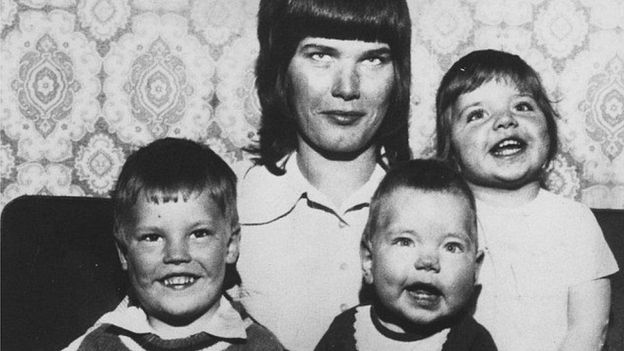
Elsie Ralph and her three children Paul, Dawn and Samantha
Pic-Elsie Ralph sits with her three children (l-r) Paul, Samantha and Dawn
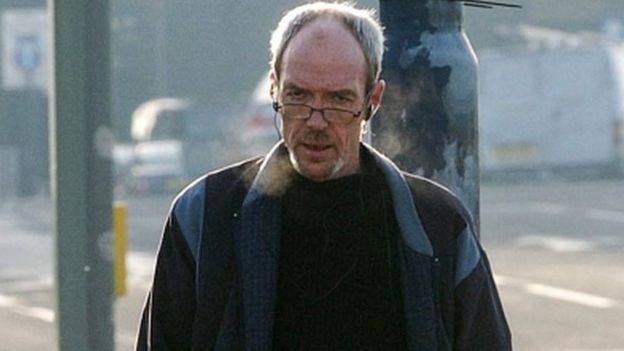
David McGreavy leaving Liverpool after a visit to a hostel.
Pic-David McGreavy was sentenced in 1973
A woman says she fears seeing the man who murdered her three children, after he was cleared for release from prison.
David McGreavy killed Elsie Urry's children, Paul Ralph, four, Dawn, two, and nine-month-old Samantha at their Worcester home in 1973.
He would be subject to exclusion zones, including where Ms Urry lives, but she said she could bump into him elsewhere.
The Parole Board said a victim was entitled to request for conditions to be added to a release licence.
McGreavy, who was dubbed the "Monster of Worcester", was 21 at the time of the murders and was the family's lodger. He impaled the children's bodies on railings.
There would be zones related to Worcester, Malvern, Droitwich and where Ms Urry lives in Hampshire.
Asked where she would want included, she told BBC Hereford and Worcester: "I go to Basingstoke... with my brother, where they live, and things like that and it doesn't... cover that does it?"
She said she could not understand why the authorities were even considering releasing McGreavy.
"There's people in prison who have done murders, not half as bad as what he's done, and yet they haven't been put up for parole, so why should he get it?"
Ms Urry now said she had a fear she could bump into him in the street, if she visited friends and family.
"In the back of my head I just feel that if I did bump into him - and because I'd kept him in for these extra years - would that create a problem?"
Asked if she had had conversations about where she hoped he would not be able to go, Ms Urry said: "Nobody asked me. Nobody gave me that choice."
A Parole Board statement regarding exclusion zones said: "The Parole Board panel considering the case will decide if the request (for a zone) is necessary and proportionate for the prisoner to be safely managed in the community.
"If the panel does not approve the request, or give an adapted version of it, they will explain that in the parole decision.
"This will be passed on to the victim by their victim liaison officer, in accordance with the Victims' Code of Practice."
A Parole Board report has said McGreavy had "changed considerably" over 45 years in jail.

Homicides in England and Wales hit highest in a decade

Crime reporter(wp/reuters):::
The number of homicides in England and Wales hit their highest level in a decade, official statistics showed on Thursday, as authorities struggle to halt a surge in fatal stabbings.
The Office for National Statistics said homicides - which includes murders and manslaughter - had been rising since March 2014, in contrast to falling numbers over the previous decade.
While still rare in Britain, the sharp rise in murders, especially from knife-crime, has put pressure on Prime Minister Theresa May, whose government has been focused on trying to leave the European Union.
The government said it had given police extra powers and billions of pounds of extra funding.
“Too many people are still falling victim to serious violence, which is why we will continue our urgent and unprecedented action to reverse this terrible trend,” junior minister Nick Hurd said.
The Labour Party said the government was “in denial” about the impact of police funding cuts.
Reductions in police staffing levels during May’s time as Home Secretary were a big issue during campaigning for the 2017 election, at which she lost her majority.
Since then, the number of homicides has increased further.
Police-recorded statistics showed a 6 percent rise in homicides to 732 in the year ending December 2018, the highest levels since the year to March 2008.
The figures for 2017 were pushed up by militant attacks in London and Manchester which killed 36 people.
Excluding casualties from those attacks, there was a 12 percent increase in homicides in 2018.
Official statistics published last month showed there were 285 fatal stabbings in England and Wales in 2018, the highest level since records began more than 70 years ago.
Police say the surge in knife crime in a country where guns are hard to obtain has been driven by several factors, including rivalries between drug gangs, cuts to youth services and provocations on social media.

Goldman, Bank of England and stock exchange targeted by climate activists in London

Banking reporter(wp/reuters):::
Environmental activists glued themselves to the London Stock Exchange, blocked roads near the Bank of England and protested outside banks such as Goldman Sachs on Thursday to try to force Britain to help avert what they cast as a climate cataclysm.
The Extinction Rebellion group has caused mass disruption across London, blocking Marble Arch, Oxford Circus and Waterloo Bridge, smashing a door at the Shell building and shocking lawmakers with a semi-nude protest in parliament.
On Thursday, they turned their attention to London’s financial district, known as the City - home to more international banks than any other and the global centre for foreign exchange trading.
In streets beside the Bank of England, around 20 activists blocked the road singing Bob Marley’s “One Love”.
Outside Goldman Sachs European headquarters, protesters blocked Fleet Street, lying on the ground. One held a placard saying “No jobs on a dead planet” and others chanted: “What do we want? Climate justice. When do we want it? Now.”
At the London Stock Exchange’s headquarters, seven protesters dressed in black suits and red ties were blocking the revolving doors of the building. They held signs reading “Tell the truth” and “You can’t eat money”.
In Canary Wharf, five protesters from the group climbed aboard a train at the Docklands Light Railway (DLR) station and unfurled a banner which read: “Business as usual = Death”. One glued herself to a train.
“Its bizarre we have to do this in order for governments to listen to the scientists,” said Diana Warner, 60, who glued her hand to the train.
“I’ve got children who are grown up so I can do this, so I’m doing it for everyone who can’t.”
The activists plan protests outside other banks including Rothschild, Nomura, Deutsche Bank, Royal Bank of Canada and Rabobank, according to a protest planning document seen by Reuters.
In the past 11 days, the group has brought iconic parts of central London to a standstill in what activists have described as the biggest act of civil disobedience in modern British history.
Sources at major banks said security staff had been fully briefed on their status as possible targets but had no plans to enhance security to deal with the disruption.
Extinction Rebellion advocates non-violent civil disobedience to force governments to reduce carbon emissions and avert what it says is a global climate crisis that will bring starvation, floods, wildfires and social collapse.

LONDON CALLING?

Police said 1,088 arrests had been made since the main protests began. The final day of protests is focusing on the international financial sector, which has made London its home.
“So we’re here today to highlight that there are people and businesses trading in ecological destruction in that building behind us,” Adam Woodhall, a 48-year-old spokesman for the group, said outside the London Stock Exchange.
“We want the people in this building and around the world that in the financial industry to understand the impact that they are having on our futures. They are trading and making money in our futures.”
The group is demanding the government declare a climate and ecological emergency, reduce greenhouse gas emissions to net zero by 2025 and create a citizen’s assembly of members of the public to lead on decisions to address climate change.
In 2017, total United Kingdom greenhouse gas emissions were 43 percent lower than in 1990 and 2.6 percent lower than 2016, according to government statistics.
The group said they would end their protests in London on Thursday and would end their blockades at Parliament Square and Marble Arch.
However, they promised more protests in the future, saying direct action was the only way to bring the issue to public attention.