If such jail sentences were to be scrapped it is thought it could free up thousands of prison places.
Some burglars and most shoplifters are among those who could be spared jail terms under the proposals.
'They lose their reputation'
The Ministry of Justice is considering preventing courts from imposing prison terms of less than six months unless the sentence is for a violent crime or a sexual offence.
The measure could reduce the prison population by around 3,500, although it would require legislation.
In Scotland, a presumption against prison sentences of less than three months is already in place and is due to be extended to 12 months.
Arguing for the need for reform, Mr Stewart told the Daily Telegraph Magazine: "You bring somebody in for three or four weeks, they lose their house, their job, their family, their reputation.
"They come (into prison), they meet a lot of interesting characters (to put it politely) and then you whap them on to the streets again.
"The public are safer if we have a good community sentence... and it will relieve a lot of pressure on prisons."
Since they took up their posts last year, Justice Secretary David Gauke and Mr Stewart have both made it clear they want to reduce the use of short prison sentences.
The prison population has doubled in England and Wales since the early 1990s, rising from around 40,000 to more than 80,000 in 2018, official figures show.
Almost two-thirds of prisoners released after sentences of less than 12 months reoffend within a year.
More than half of the 86,275 offenders sentenced to immediate custody in England and Wales in 2017 were handed sentences of six months or less, according to a Parliamentary response from Mr Stewart to shadow justice secretary Richard Burgon last month.
Mr Stewart said he realised that the proposals could provoke a backlash against "soft justice" by people in his own party and the public, but said it was "a debate I have to win".
Peter Dawson, the charity's director, told the Telegraph: "Ministers should be congratulated for having the political courage to start the debate."
An MoJ spokesperson said: "As we have said previously, short sentences are too often ineffective, provide little opportunity to rehabilitate offenders and lead to unacceptably high rates of reoffending.
"That's why we are exploring potential alternatives, but this work is ongoing and we have reached no conclusions at this time."
Senior British ministers have urged Prime Minister Theresa May to invite opposition leader Jeremy Corbyn for talks with a view to agreeing a joint Brexit plan if parliament votes down her deal next week, Bloomberg reported on Friday.
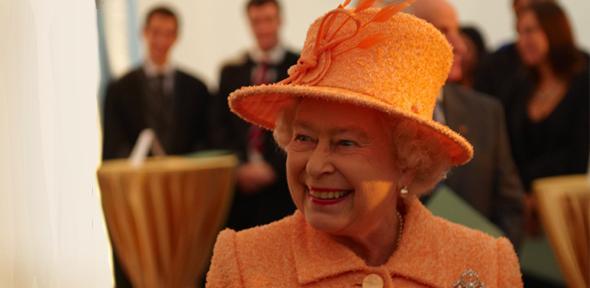
Pic:::Her Megistry Queen Elezabeth-II(wp) University reporter,cambridge(wp)::: Members of collegiate Cambridge recognised for outstanding contributions to society in Science, Education, Engineering and Art.
Professor David Klenerman, FRS was knighted for Services to Science and for the Development of High Speed DNA Sequencing Technology.
Professor Klenerman said: “I feel very humbled to be recognised in this way.”
Sir David is a professor of biophysical chemistry at the Department of Chemistry at the University of Cambridge and a Fellow of Christ's College. He is best known for his contribution in the field of next-generation sequencing of DNA, which subsequently resulted in Solexa, a high-speed DNA sequencing company that he co-founded.
“I also want to acknowledge and sincerely thank the highly talented people who have worked with me over the years and without whom my research would simply not have been possible. In particular the development of Solexa sequencing was the result of a massive team effort.”
Klenerman was educated at the University of Cambridge where he was an undergraduate student of Christ's College and received his Bachelor of Arts degree in 1982. He earned his Doctor of Philosophy degree in chemistry in 1986 as a postgraduate student of Churchill College.
Sir David has received a string of honours for his work, including a 2018 Royal Medal from the Royal Society for his outstanding contribution to applied sciences. He was elected as a Fellow of the Academy of Medical Sciences in 2015 and Fellow of the Royal Society in 2012.
Professor Madeleine Julia Atkins, who was first honoured as a CBE in 2011, has been promoted DBE for her Services to Higher Education.
Dame Madeleine, lately Chief Executive of the Higher Education Funding Council for England, has had a long and distinguished career in higher education, most recently providing outstanding leadership in ensuring a smooth transition between HEFCE and the new Office for Students and Research England. She has also been a Trustee and Board member for Nesta, and was until recently a Deputy Lieutenant in the West Midlands. She has been a Pro-Vice-Chancellor at Newcastle University, is a former Vice-Chancellor of Coventry University, and is now President of Lucy Cavendish College here at Cambridge University. She studied for a degree in law and history at Girton College and has a PhD from the University of Nottingham.
Dame Madeleine said: “I am honoured to receive this award, which recognises the contribution of my former colleagues at HEFCE who worked so hard to make the transition to OfS and Research England both smooth and successful. I am delighted now to be bringing some of my experience in the higher education sector to support the students and Fellowship of Lucy Cavendish College”.
Professor John Frederick William Birney, FRS, the joint director, European Bioinformatics Institute was awarded a CBE For Services to Computational Genomics and to Leadership across the Life Sciences.
Professor Birney is Director of EMBL-EBI, Europe's flagship laboratory for the life sciences, and runs a small research group. He played a vital role in annotating the genome sequences of human, mouse, chicken and several other organisms. He led the analysis group for the ENCODE project, which is defining functional elements in the human genome. Birney’s main areas of research include functional genomics, assembly algorithms, statistical methods to analyse genomic information (in particular information associated with individual differences) and compression of sequence information.
Professor Birney, known as Ewan to his friends, family and colleagues, was educated at Eton, Oxford and St John’s College, Cambridge.
Dr Jennifer Mary Schooling, Director of the Centre for Smart Infrastructure and Construction (CSIC), University of Cambridge was awarded an OBE For Services to Engineering and to Digital Construction.
Dr Schooling is a Fellow of Darwin College and has been the Director of CSIC since April 2013. CSIC focuses on how better data and information from a wide range of sensing systems can be used to improve our understanding of our infrastructure, leading to better design, construction and management practices. CSIC has strong collaborations with industry, developing and demonstrating innovations on real construction and infrastructure projects, and developing standards and guidance to enable implementation. Dr Schooling is also Chair of the Research Strategy Steering Group for the newly formed Centre for Digital Built Britain. Dr Schooling is founding Co-Editor-in-Chief of the Smart Infrastructure and Construction Proceedings journal (ICE). She recently served as a member of PAS185 smart cities security standard steering group and of ICE’s State of the Nation 2017 ‘Digital Transformation’ Steering Group. Prior to joining CSIC, Dr Schooling worked for Arup, leading the firm’s Research Business, and before that for Edwards Vacuum (then BOC Edwards) as a manager for New Product Introductions. She has a PhD from the University of Cambridge.
Andrew Nairne, Director of Kettle’s Yard, was awarded an OBE for Services to Museums and the Arts. Kettle’s Yard is the University of Cambridge’s modern and contemporary art gallery.
Andrew Nairne said: “I am delighted to receive this recognition following the hugely successful reopening of Kettle’s Yard in 2018: a magnificent team effort.”
“As Director of one of the eight University of Cambridge Museums, I believe museums have a vital role to play in the life of both the University and the community.”
The Honours list, which dates back to around 1890, recognises notable services and contributions to Britain.
university reporter,Cambridge(wp)::: Scientists have developed a 3D-printed robotic hand which can play simple musical phrases on the piano by just moving its wrist. And while the robot is no virtuoso, it demonstrates just how challenging it is to replicate all the abilities of a human hand, and how much complex movement can still be achieved through design.
The robot hand, developed by researchers at the University of Cambridge, was made by 3D-printing soft and rigid materials together to replicate of all the bones and ligaments – but not the muscles or tendons – in a human hand. Even though this limited the robot hand’s range of motion compared to a human hand, the researchers found that a surprisingly wide range of movement was still possible by relying on the hand’s mechanical design.
Using this ‘passive’ movement – in which the fingers cannot move independently – the robot was able to mimic different styles of piano playing without changing the material or mechanical properties of the hand. The results, reported in the journal Science Robotics, could help inform the design of robots that are capable of more natural movement with minimal energy use.
Complex movement in animals and machines results from the interplay between the brain (or controller), the environment and the mechanical body. The mechanical properties and design of systems are important for intelligent functioning, and help both animals and machines to move in complex ways without expending unnecessary amounts of energy.
“We can use passivity to achieve a wide range of movement in robots: walking, swimming or flying, for example,” said Josie Hughes from Cambridge’s Department of Engineering, the paper’s first author. “Smart mechanical design enables us to achieve the maximum range of movement with minimal control costs: we wanted to see just how much movement we could get with mechanics alone.”
Over the past several years, soft components have begun to be integrated into robotics design thanks to advances in 3D printing techniques, which has allowed researchers to add complexity to these passive systems.
The human hand is incredibly complex, and recreating all of its dexterity and adaptability in a robot is a massive research challenge. Most of today’s advanced robots are not capable of manipulation tasks which small children can perform with ease.
“The basic motivation of this project is to understand embodied intelligence, that is, the intelligence in our mechanical body,” said Dr Fumiya Iida, who led the research. “Our bodies consist of smart mechanical designs such as bones, ligaments, and skins that help us behave intelligently even without active brain-led control. By using the state-of-the-art 3D printing technology to print human-like soft hands, we are now able to explore the importance of physical designs, in isolation from active control, which is impossible to do with human piano players as the brain cannot be ‘switched off’ like our robot.”
“Piano playing is an ideal test for these passive systems, as it’s a complex and nuanced challenge requiring a significant range of behaviours in order to achieve different playing styles,” said Hughes.
The robot was ‘taught’ to play by considering how the mechanics, material properties, environment and wrist actuation all affect the dynamic model of the hand. By actuating the wrist, it is possible to choose how the hand interacts with the piano, allowing the embodied intelligence of the hand to determine how it interacts with the environment.
The researchers programmed the robot to play a number of short musical phrases with clipped (staccato) or smooth (legato) notes, achieved through the movement of the wrist. “It’s just the basics at this point, but even with this single movement, we can still get quite complex and nuanced behaviour,” said Hughes.
Despite the limitations of the robot hand, the researchers say their approach will drive further research into the underlying principles of skeletal dynamics to achieve complex movement tasks, as well as learning where the limitations for passive movement systems lie.
“This approach to mechanical design can change how we build robotics,” said Iida. “The fabrication approach allows us to design mechanically intelligent structures in a way that is highly scalable.”
“We can extend this research to investigate how we can achieve even more complex manipulation tasks: developing robots which can perform medical procedures or handle fragile objects, for instance,” said Hughes. “This approach also reduces the amount of machine learning required to control the hand; by developing mechanical systems with intelligence built in, it makes control much easier for robots to learn.”
The research was funded by the Engineering and Physical Sciences Research Council (EPSRC).
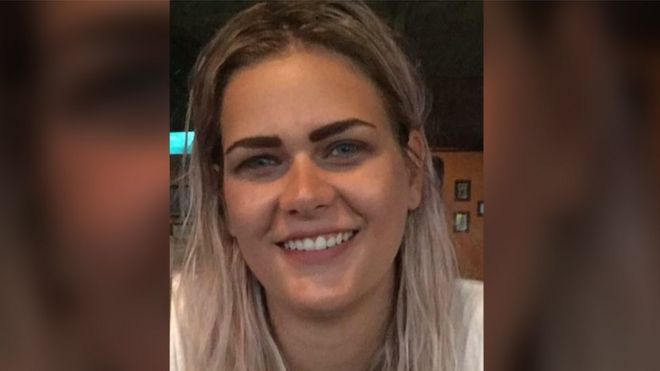
Pic:::Katerina Makunova was stabbed to death in Camberwell
Crime reporter(wp/es):::
A teenage girl died after falling onto a knife during a struggle with her ex-boyfriend, a court has heard.
Katerina Makunova, 17, was found slumped in a block of flats in Brisbane Street, Camberwell, last July and died from a stab wound.
The teen, from Forest Hill, had been described as a “loving ambitious” girl by her brother.
Oluwaseyi Dada, also of Brisbane Street, pleaded guilty to manslaughter on Wednesday at the Old Bailey.
The court heard the pair had been in a relationship that had recently deteriorated.
In tragic circumstances, the court heard how Ms Makunova fell onto a knife after an altercation began between the pair.
On July 12, Ms Makunova and Dada went onto the lobby of a block of flats where Dada lived. According to police, “a struggle began”.
Police said: “During the course of this altercation both of them fell, but unfortunately Katrina was carrying a knife in her handbag
“Katrina fell onto the handbag, causing the knife to pierce the bag and then stab Karina in the chest.”
Officers arrived to the scene, at about 12.15pm, and found Dada desperately administering CPR to Ms Makunova.
Despite the efforts of paramedics and Dada, she was pronounced dead at the scene an hour later.
A post mortem examination took place and gave cause of death as a single stab wound.
Detective Inspector Domenica Catino of the Homicide and Major Crime Command, said: "A young woman has lost her life and my thoughts are with her family and friends, who have been devastated by Katrina's death.
"This is another young person who has been killed as a result of a knife and we need our communities to work with the police to end this scourge."
Her sister-in-law Shannon Jodie-Leigh Butcher said the whole family were “heartbroken and devastated”.
“I would like her to be remembered as a young, joyful and beautiful girl,” she added. “She was bright, confident, always smiling.
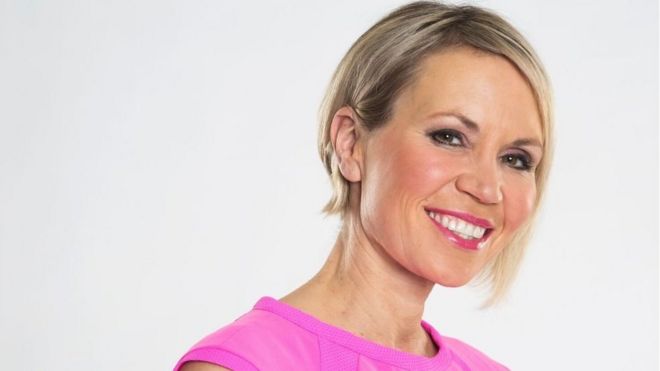
Pic:::Dianne Oxberry was BBC North West Tonight's weather presenter for more than 20 years/wp/bbc Staff reporter(wp/bbc):::
Award-winning BBC television and radio presenter Dianne Oxberry has died from cancer aged 51, her family has confirmed.
She died at the Christie hospital in Manchester on Thursday morning.
Oxberry became well-known nationally on Radio 1, working alongside Simon Mayo and Steve Wright, during the 1980s.
After studying meteorology, she joined BBC North West Tonight in 1994 as a weather presenter and fronted Inside Out North West's current affairs show.
BBC North West Tonight (NWT) presenters Roger Johnson and Annabel Tiffin said they were "heartbroken".
After her time at Radio 1 in London, Sunderland-born Oxberry returned north to Greater Manchester in 1993 with her husband, cameraman Ian Hindle.
The couple, who have two young children, met in Manchester while she was co-presenting the Saturday morning children's television show, The 8:15 From Manchester.
Mr Hindle said: "Dianne was an amazing wife and mother who embraced life to the full.
"She was an inspiration to all who knew and loved her but also to the people who watched and welcomed her into their homes each night as if she were part of their family too.
"She will leave a massive void in our lives but because of the remarkable person she was she will forever live on in our hearts.
"The children and I will miss her more than anyone can imagine."
Oxberry recently took part in a 100-mile relay walk for Children in Need completing the challenge with her NWT colleagues.
Roger Johnson said: "We are heartbroken by Dianne's death. It is almost impossible to comprehend. Dianne was North West Tonight. It's hard to imagine the programme without her.
"Our thoughts are with Ian and all of Dianne's family. We hope they will find some comfort in the knowledge so many people loved Dianne and will miss her terribly."
Tiffin added: "Di was so talented, so beautiful, so funny and so full of life. On screen she was a star, radiating warmth and good humour. Off screen, she was a wonderful colleague, a loyal friend and I will miss her terribly."
BBC Radio 2 presenter Simon Mayo tweeted: "Devastated to hear this news. She was a wonderful, joyous part of our breakfast team at Radio 1. I loved working with her. My condolences to her family."
Football pundit Mark Lawrenson also tweeted that he was "stunned".
"I've worked with Ian Hindle, her husband on many occasions and my thoughts are with him and the kids... RIP."
Elbow singer Guy Garvey shared his memories of working with Dianne.
Broadcaster Clare Balding said Oxberry was "a courageous warrior on behalf of women fighting for equality", adding: "Her star will shine on".
In an emotional interview on BBC Radio Manchester, Johnson quoted comedian Peter Kay, who invaded her live forecasts on a few occasions, once hugging her and telling her: "God love Dianne Oxberry - you made the sun shine for everybody!"
Johnson said: "For me, those words are Dianne's epitaph: 'God Love Dianne Oxberry - she made the sun shine for everybody.'"
Aziz Rashid, head of BBC North West, said: "We are all devastated by this dreadful news. The coming days will be difficult but we will do our best to pay tribute to someone who meant so much to us all and made such an enormous contribution to broadcasting in the North West."
In a long career, Oxberry interviewed a young Take That for their first major network appearance on The 8:15 from Manchester.
She also worked with BBC Sport, covering the Great North Run and the Manchester 10k.
In 2002, she was asked to present BBC Radio Manchester's lunchtime show. She then co-hosted the station's breakfast show with Eamonn O'Neal between 2006 and 2008.
She loved spending time with animals, in particular her beloved horses, and described herself on Twitter as a "full-time pet-collector".
Pic:::Bethan Roper worked for the Welsh Refugee Council at the time of her death/wp/bbc Crime reporter(wp/bbc)::: A passenger was killed while leaning out of a train window below a warning sticker, accident investigators found
Bethan Roper, 28, from Penarth, suffered a fatal blow to the head when she was struck by a tree branch.
The charity worker, had been shopping at Bath's Christmas market with friends on 1 December and was travelling home.
A preliminary report by the Rail Accident Investigation Branch (RAIB) found the Bristol-bound train was travelling at 85mph at the time.
The accident happened at 22:04 GMT near Twerton and Miss Roper was pronounced dead at Bristol Temple Meads station shortly after 22:10.
The older-style Great Western Railway (GWR) train's doors were fitted with an opening window to enable passengers to access the handle on the outside.
The RAIB said that a yellow "Caution" label above the door said: "Do not lean out of window when train is moving."
Its full investigation will examine the measures in place to "control the risks from persons leaning out of train windows, including the threat from vegetation".
Miss Roper worked for the Welsh Refugee Council charity and was chairman of Young Socialists Cardiff.
Her father, Adrian Roper, 63, said his daughter "enjoyed life to the full whilst working tirelessly for a better world".