A UKIP member who said he looked after party leader Gerard Batten at a rally called for a campaigner to be beheaded, a BBC investigation has found.
Kenneth Allen said Gina Miller, who campaigned for MPs to vote on Article 50, should have her head cut off and left outside Buckingham Palace.
He also said a "full pig" should have been thrown at a mosque in Blackpool.
Mr Batten said he "deplored" the posts and Mr Allen was not a member when he made the remarks on Facebook in 2016.
Mr Allen also warned a woman before the EU referendum to "do yourself a big favour and vote out so you don't get raped of (sic) a migrant".
He said he looked after Mr Batten when the UKIP leader appeared at a rally in Sunderland in September.
Mr Allen also called Ms Miller a "cow traitor" in the Facebook post.
He did not want to comment when he was approached by BBC Inside Out.
Ms Miller said: "It's frightening. To actually be confronted with the words.
"It's ridiculous to think that I now think it's normal for people to threaten me on a daily basis, but to see it in black and white... that somebody wants me to be beheaded and my head put outside Buckingham Palace.
"This is just one of the death threats I get almost on a daily basis."
UKIP leader Mr Batten said: "I attended a rally organised by justice for women and children on 15 September.
"Many people ask to have their photograph taken with me at these events and it would be impractical and rude of me to refuse them.
"Kenneth Allen was a lapsed member who renewed his membership in April 2018. When he made the posting in question he was not a member of the party.
"I deplore the remarks made and these in no way represent the views of me, UKIP, or the overwhelming numbers of our membership."
He said the party could only take action if someone lodged a formal complaint, and he hoped the BBC would not try to smear UKIP or himself by means of "guilt by association".
Asking prices for British property are rising at the slowest pace since 2012 amid ongoing Brexit worries, property website Rightmove said on Monday.
Rightmove’s data suggested a continuation of the weakness in British house prices that intensified in 2018, especially in and around London where fears of economic damage from Brexit made buyers loath to pay more for already-expensive homes.
“Given the current market backdrop and ongoing political turmoil, it’s not surprising that the more challenging conditions in London and nearby regions mean they have had a slower start to the year,” Rightmove director Miles Shipside said.
Last week the Royal Institution of Chartered Surveyors said its members had the most negative outlook for house sales over the coming three months since its records began in 1999.
Asking prices on Rightmove, which advertises property for 90 percent of British estate agents, were 0.4 percent higher in the first two weeks of January than a year earlier.
Prices were also 0.4 percent up on December levels, the weakest December to January increase since 2012.
Britain is due to leave the European Union on March 29, but Prime Minister Theresa May’s record parliamentary defeat over her plans last week has thrown into doubt the terms, timing and even the certainty of Brexit.
Rightmove said potential buyers were tuning out the political noise and the number of people viewing property on its website in the first half of January was up 5 percent from 2018.
“Mass-market home-movers have a track-record of ignoring the politics and continuing to satisfy their housing needs, and as long as these fundamentals remain in place through this period of uncertainty, the market will keep moving,” Shipside said.
A record number of British energy customers switched supplier last year, with one in five customers making a change, data from industry group Energy UK showed on Monday.
Britain’ big six energy companies have been losing customers over the past few years, under pressure from smaller, nimbler rivals often offering cheaper deals.
The data did not reveal which companies gained or lost customers, but showed 30 percent of switches were to small or mid-tier firms.
A record 5.9 million customers changed supplier in 2018, up from 5.5 million in 2017, the data showed.
A price cap on energy prices by regulator Ofgem has come into force this year, which some suppliers have warned could stifle competition and lead to reduced switching rates.
“My hope remains that, with the recent introduction of the price cap, we don’t see this element of competition undermined and switching levels fall,” Energy UK chief executive Lawrence Slade said.
Consumer groups say the best way for people to ensure they are paying the lowest possible price is still to shop around for a deal.
Britain’s big six energy suppliers are Centrica’s British Gas, SSE , E.ON , EDF Energy , Innogy’s Npower and Iberdrola’s Scottish Power.
Three rogue directors of “London’s worst letting agency” who scammed their customers out of more than £100,000 have been jailed.
Mohammed Rayn Mashuk, 42, Mohammed Ibrahim Ali, 37, and Ahmed Ali Syed, 37, pocketed rent payments and deposits while running Crestons agency, fobbing off landlords and tenants who tried to retrieve their money.
One couple’s honeymoon was ruined as they battled with Crestons over £8,400 of missing rent, while other victims were forced to instruct lawyers to fight for their money. One family lost £25,000 after hiring the firm to rent out a property, eventually going to the High Court to wind down the company.
Yesterday at Blackfriars crown court, Judge Jane Sullivan sentenced the three men to two years and four months each in prison, and banned them from acting as company directors for the next eight years. “You each played a leading role, abusing the trust and responsibility placed in you,” the judge said. “This was deliberate reckless trading conducted over a sustained period.”
Prosecutor Richard Heller said £105,000 was taken from at least 19 victims who hired Crestons through its offices in Camden, Islington and Spitalfields. He said a series of “phoenix” company names were used to keep the scam going between 2013 and 2016, so that when one had to be shut down another identical operation would spring up. One couple’s battle with Crestons “coincided with getting married and having to deal with matters while on their honeymoon”, Mr Heller said.
An online review called it “the worst agent in London” and the agents “bullies” who “used threats of eviction and intimidation”.
Mashuk, from Barking, Ali, from Southall, and Syed, of King’s Cross, were all convicted of fraudulent trading after a trial. They will also face confiscation proceedings to recover the money.
A man has been charged with flying a drone near Heathrow Airport on 24 December.
George Rusu is accused of using a drone on a field near the runway just days after a scare at Gatwick grounded more than 1,000 flights.
He has been charged with flying a "small unmanned aircraft without permission of air traffic control".
Mr Rusu, 38, from Hillingdon, will appear at Uxbridge Magistrates' Court on Tuesday.
The alleged incident happened just three days after Gatwick Airport fully reopened on December 21, following three days of chaos affecting about 140,000 passengers.
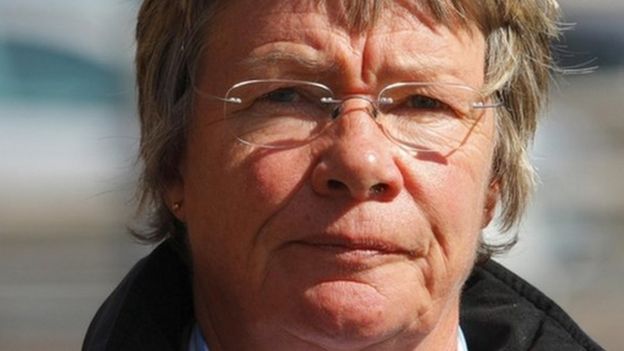
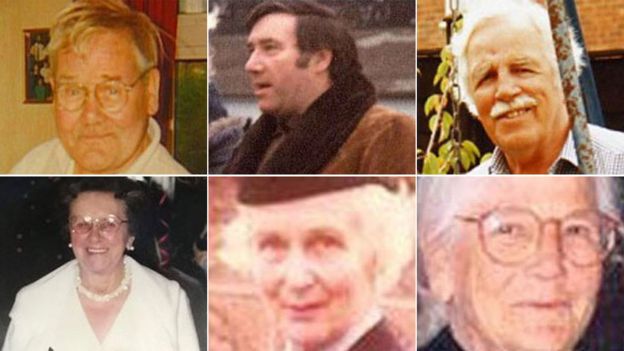
Pic--1::Dr Barton was found guilty of serious professional misconduct in 2010 but no prosecutions were brought/wp-bbc Pic--2::Inquests into the deaths of 10 patients, six of whom are pictured, were held in 2009 Crime reporter(wp/bbc)::: There is "strong" evidence to bring criminal charges after the deaths of hundreds of patients at Gosport War Memorial Hospital, the detective who led an investigation believes.
An inquiry in June last year found more than 450 patients died after being given "dangerous" levels of drugs.
Dr Jane Barton, the GP at the centre of the scandal, prescribed strong opioid painkillers to elderly patients.
Hampshire Constabulary previously investigated the hospital three times.
No charges have ever been brought.
Many patients who died had been sent to the hospital to recover from operations.
Former Assistant Chief Constable Steve Watts, who led the third and largest investigation into 94 deaths, told BBC Panorama he believes the evidence was enough to take the case to court.
"I think it's strong enough now, I think it was strong enough then, and I think there was an overriding public interest in doing so," he said.
During the investigations, the Crown Prosecution Service (CPS) looked at possible charges of manslaughter and murder in relation to Dr Barton and some nurses who administered the drugs.
However, prosecutors decided there was not a reasonable chance of securing convictions.
Mr Watts said: "I knew what the response of the families was going to be, I knew what the response of the public was going to be and I recall talking to the prosecutors and saying that this will end up in a public inquiry and eventually I think the matter will go before a court."
Police in Hampshire handed the case over to their colleagues in Kent and Essex who are now reviewing the evidence to decide if a fourth police investigation is necessary.
BBC Panorama has examined witness statements given to the earlier police investigations by nurses working inside the hospital.
They told police they thought diamorphine, delivered continuously to patients by a syringe driver, did shorten patients' lives.
One auxiliary nurse said: "It got to the stage that every time Dr Barton came to the annexe, I would think to myself who's going to die now?"
In another statement, a staff nurse said: "It seemed that most patients were going on drivers even when they were not in pain."
Another nurse said they believed the drug was used "to keep the waiting lists down".
However, former nurse Sheelagh Joines, who was sister on Gosport's Daedalus Ward between 1993 and 1997, disagreed.
"As far as I am concerned Dr Barton didn't shorten any lives on my ward," she said.
"They were nursed to the best of my ability and they had what every patient is entitled to - peaceful, pain-free, dignity - and I mean dignified death."
She added at one stage the ward felt like a "dumping ground".
"They were sent to us and we were hoping we could rehabilitate them which we tried.
"But it soon became apparent they were nursing care, and they had damn good nursing care, but they weren't rehabilitation."
Dr Barton, who declined to comment, was disciplined by the General Medical Council in 2010 for serious professional misconduct, but she was not struck off and retired soon after.
She said the consultants in charge knew what she was doing and that she was doing her best in an inadequately resourced part of the health service.
Dr Barton also said she was under unreasonable and increasing pressure and patients were too poorly for rehabilitation.