The NHS is seeing the first sustained fall in GP numbers in the UK for 50 years, the BBC can reveal.
An analysis by the Nuffield Trust think tank for the BBC shows the number of GPs per 100,000 people has fallen from nearly 65 in 2014 to 60 last year.
The last time numbers fell like this was in the late 1960s and it comes at a time when the population is ageing and demands on GPs are rising.
Patient groups said it was causing real difficulties in making appointments.
There have been reports of waits of up to seven weeks for a routine appointment, while those needing urgent appointments have been forced to queue outside practices in the early morning to guarantee to be seen.
The pressures on GPs are being looked at by the BBC as part of a special day of coverage, including a Panorama investigation.
Dr Helen Stokes-Lampard, president of the Royal College of GPs, said: "General practice cannot be allowed to fail. It is an absolute cornerstone of the NHS."
NHS bosses maintain that steps are being taken to improve access, with more GPs being trained and extra support staff recruited to work alongside them.
The Nuffield Trust analysis looked at the number of GPs working in the NHS - both full and part-time - per 100,000 people across the UK.
It shows that during the late 1960s the numbers were falling, before four decades of almost continuous growth.
A peak of 66.5 was reached in 2009, before the increases tailed off.
There have now been four consecutive years of falls with the biggest drops being seen in England.
The fall in GPs from 64.9 per 100,000 to 60 per 100,000 means the average doctor now has 125 more patients to look after than they did in 2014.
The Nuffield Trust believes another 3,500 GPs would be needed to get the NHS back to where it was in 2014.
There are just over 42,000 working currently, down by nearly 1,500 in four years.
Patients report it is getting more difficult to get an appointment.
The biggest survey of GP patients is carried out by Ipsos MORI for NHS England.
About 750,000 patients are surveyed each year.
While satisfaction ratings remain high, only two in three people needing an urgent appointment on the day are able to get one.
Kent is one of the areas with the worst problems.
The local patient network - Healthwatch Kent - has been investigating access to GPs.
Its chief executive Steve Illet said: "Patients have been reporting they are having to wait six or seven weeks for routine appointments. And even when they try to get an urgent one they can be forced to queue outside surgeries before they are open.
"It is a real problem. Some GP surgeries are really struggling to recruit the staff they need, particularly the smaller surgeries."
Where are all the GPs going?
For a number of years the NHS was struggling to attract junior doctors to become GPs.
At one point, as many as one in 10 training places was going unfilled.
That has now been rectified - and the number of training places increased.
Last year, nearly 3,500 GP trainee posts were taken up in England, up by 800 since 2014.
This boost in numbers has yet to be fully felt as it takes at least three years to train a junior doctor to become a GP.
What is more, one in three junior doctors who accept places on GP training courses, drops out of the system, according to the Nuffield Trust.
Meanwhile, the numbers retiring early have been increasing.
Two-thirds of retirements by GPs come early - double the rate seen just five years ago.
The BMA said doctors were being asked to work longer and harder, without recognition or an increase in pay.
Dr Richard Vautrey, of the BMA, said workloads were now "unmanageable" for many.
It's not safe - GP
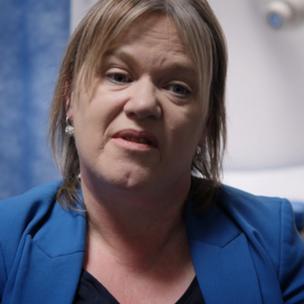
Dr Carmel Boyham Irvine has worked at the North Road West Medical Centre in Plymouth for 26 years.
She has seen demand increase as the population ages with patients needing help and care for ever more complex conditions.
She now deals with 50 to 60 patients a day - either on the phone or in person.
She told BBC's Panorama programme the situation was simply "not safe".
She is one of two GP partners - senior doctors who are responsible for the practice.
They have been trying to recruit another partner for five years but have had no success.
During that time the size of the practice's patient list has increased by 1,300 to 8,300.
"The sustainability of this particular practice is questionable," she added.
All parts of the UK said steps were being taken to address pressures on general practice.
As well as increasing training places, steps are also being taken to increase the number of health staff to work alongside GPs.
Dr Nikita Kanani, of NHS England, suggested this would help ease demand on GPs.
But she acknowledged the service was facing "significant pressure".
Similar plans are being introduced in Scotland and Wales with a Welsh government spokesman saying the aim is to "transform" the way services are organised.
The Labour Party - which has previously floated the idea of a basic income - said it would study the report ahead of drawing up its next manifesto.
A universal basic income is already being trialled in other countries.
The report, entitled Basic Income as Common Dividends: Piloting a Transformative Policy, was written by Professor Standing, an authority on the concept of the basic income.
He was asked to write it by the Progressive Economy Forum, a left-leaning group of economists.
Advocates of a basic income say it reduces poverty and inequality by providing a guaranteed income.
But Conservative deputy chairman Helen Whately said it would be "a kick in the teeth to hardworking taxpayers".
"It would mean benefit payments for everyone, from Premier League footballers to investment bankers and even prisoners, costing billions, while hammering ordinary workers in the pocket by scrapping the tax-free income allowance."
What is a basic income?
Universal basic income, or UBI, means that everyone gets a set monthly income, regardless of means.
The author of this latest report, Professor Guy Standing, told the BBC: "A basic income would be paid in cash, a moderate amount, a basic amount unconditionally to each individual man and woman equally, a smaller amount for a child and the good thing is it would be unconditional and it wouldn't be means tested and it would be a right, an economic right."
How much would it be?
Professor Standing said the amount would change over time as the funding for a basic income is built up.
However, initially he said the weekly sum would be £48, which he said would be a "significant amount for many people".
"Now £48 is not a lot for most people but for a lot of people out there they have £20 left at the end of the week after they've paid their rent and their food, so this is a significant amount for many people."
A lower sum would be paid to children, under these proposals.
How would it be paid for?
A rough calculation shows that if about 60 million people were paid £48 a week, that would come to about £150bn a year.
Professor Standing said there are 1,156 tax reliefs in the UK at the moment and if they were scrapped that would pay for a basic income.
"What that means [is] it's income foregone by the Treasury. Most of these tax reliefs didn't have any economic rationale and they're giveaways that are increasing inequality.
"If we phased out those tax reliefs the total revenue foregone by the Treasury from tax reliefs is £420bn per year and that's their own estimates, not mine," he added.
Has it been done elsewhere?
Some countries have tested paying a basic income to citizens.
In western Kenya, the government is paying every adult in one village $22 a month for 12 years to see if a regular payment can help lift them out of poverty.
The Netherlands and Italy have also launched trials, while Scotland is considering piloting basic income schemes in four cities, including Glasgow and Edinburgh.
Shadow Chancellor John McDonnell recently said that Labour would include a plan for universal basic income in its next general election manifesto.
However, a two-year trial in Finland, where a sample of 2,000 unemployed adults were given €560 a month, was not extended.
And in Canada, Ontario's newly elected centre-right government said it was scrapping a three-year basic income pilot project that hoped to discover whether it was better than existing welfare schemes.
This is not the first time this has been suggested in the UK is it?
No, there have been a couple of similar studies this year alone.
In March the New Economics Foundation think tank published a report in which it proposed replacing the personal tax allowance with a Weekly National Allowance of £48. However, it did not call it a basic income.
A week later the leftwing think tank Compass, suggested a universal basic income of £60 for each adult, £175 for those over 65 and £40 for children under the age of 18.
What are the pros?
Shadow Chancellor John McDonnell, who is attending the launch of the independent study on Tuesday, welcomed the report.
He said: "This report is an important contribution to the debate around inequality, austerity, poverty and how we establish a fair and just economic system.
"There have been pilots of 'basic income' elsewhere and Guy Standing has looked at them and come forward with proposals.
"Whatever mechanism we use, whether 'basic income' or another, we have to lead in developing a radical mechanism aimed at eradicating poverty, but also means testing.
"We will be studying the contents and recommendations of this report carefully as we put together our reform policies for the next Labour government."
What are the cons?
Opponents of a basic income are worried about how it would be paid for and what cuts would have to be made elsewhere.
And the government has previously said a universal basic income would not work for those who need more support, such as disabled people and those with caring responsibilities.
Political reporter(wp/reuters)::: Britain’s Conservative government and the opposition Labour Party resume Brexit talks on Tuesday to try to find a way to break the deadlock in parliament over the country’s departure from the European Union.
After Prime Minister Theresa May’s deal was rejected three times and she was forced to delay Brexit, the government has spent more than four weeks in talks with Labour - negotiations that have done little to soften positions in either party.
So far, there has been no agreement between Britain’s main parties and few held out any hope of a breakthrough on Tuesday. But with the clock ticking down before European elections, when both parties could face more bruising results after local polls last week, time is running out.
Almost three years since Britain voted to leave the EU, there is little clarity about how, when or even if Brexit will happen.
Addressing her cabinet team of ministers, May bolstered her argument for talks with Labour by saying last week’s local elections, when the Conservatives lost hundreds of council seats, underlined the need to get on with Brexit.
“The prime minister said that while an agreement with the opposition had not been reached, the public had sent a clear message in the local elections that they want both of the main parties to get on with delivering Brexit,” her spokesman said she told ministers.
Some pro-EU lawmakers say the local elections showed the tide was turning against Brexit after the Liberal Democrats, which supports a second referendum, gained many council seats.
The spokesman said a further negotiation session would take place on Tuesday afternoon starting about 4 p.m. (1500 GMT).
But on both sides of the talks, there was little suggestion that this would offer a breakthrough, rather that they wanted to see whether there was a sense that any agreement could be found and on what kind of timetable.
Neither party wants to contest the elections to the European Parliament on May 23, when they fear voters will again punish them by voting for alternative parties after showing their frustration at local elections last week.
Conservative Brexit supporters might flock to the newly launched Brexit Party of former UKIP leader Nigel Farage, while Labour pro-EU campaigners might look to Change UK, another new party, or support the Liberal Democrats.
But with both parties, like much of the country, deeply divided over Brexit, any breakthrough might be hard to come by.
Labour sources were dismissive over weekend reports the government would offer new concessions, including temporary customs union with the EU until a national election due in June 2022, saying such a proposal would not go far enough.
John McDonnell, Corbyn ally and Labour’s finance policy chief, also accused the government of undermining the confidentiality of the talks by briefing the proposal - something that was denied by May’s spokesman.
That offer was quickly played down by Foreign Secretary Jeremy Hunt, who said he did not believe a post-Brexit customs union would offer “a sustainable long-term solution”.
“I want to look at whatever deal is come to between the parties and I know this is a crucial week,” he told BBC radio.
Royal correspondent(wp/reuters)::: A day after the birth of their baby boy to a global fanfare, Prince Harry and his wife Meghan on Tuesday were considering names for the newest member of the British royal family and when to show him off to the world.
Meghan gave birth in the early hours of Monday morning to the boy, the seventh-in-line to the British throne, leaving his father, the Queen’s grandson, and royal fans across the world thrilled and enthralled.
“I am so incredibly proud of my wife and, as every father and parent would ever say your baby is absolutely amazing, this little thing is absolutely to die for,” Harry said.Few details about the birth have been released by Buckingham Palace with the announcement itself a mix of traditional and modernity which many say the baby himself represents, being the first mixed race child to be born into a senior position in British royalty in recent history.
The news was relayed on an ceremonial easel outside the palace having already been splashed “It’s a Boy!” on the couple’s Instagram account, attracting more than 2.6 million “likes”.
It was not clear whether the birth took place at the couple’s home, Frogmore Cottage on the estate of Windsor Castle where they married in a lavish ceremony in May last year, or if Meghan had been rushed to a London hospital as a number of British newspapers reported.
So far, Harry and his aides have merely confirmed the boy weighed 7 lbs 3oz (3.26 kg) and that Meghan and the couple’s first child were both healthy and well.
Celebrities and world leaders were among those to send in messages of congratulations to the couple, a reflection of the star status of Harry, 34, and former U.S. actress Meghan, 37.
“Congratulations, Meghan and Harry! Barack and I are so thrilled for both of you and can’t wait to meet him,” former U.S. First Lady Michelle Obama said on Twitter.
Harry and Meghan decided to eschew the recent royal tradition of posing for photographs with their new baby hours after the birth, leaving the world’s media and royal fans waiting for a first glimpse of the boy who is entitled to both British and American citizenship.
“We’ll be seeing you guys in probably two days time, as planned, as a family to share it with you guys and so everyone can see the baby,” Harry told reporters on Monday.
“We’re still thinking about names,” Harry said. “The baby’s a little bit overdue so we’ve had a little bit of time to think about it ... that’s the next bit.”
Bookmakers have James, Alexander, Albert, Philip, and Arthur as the favourite names, although other suggestions include Spencer, which was the surname of Harry’s late mother Princess Diana.
The baby, the eighth great-grandchild of 93-year-old Elizabeth, the world’s longest-reigning monarch, will not automatically be a prince or a princess or be known as “His Royal Highness” unless the queen issues a decree.However, when Elizabeth is succeeded by Harry’s father Prince Charles, royal rules mean the boy would then have such titles.
“It’s been the most amazing experience I could ever possibly imagine,” Harry said. “How any woman does what they do is beyond comprehension.”
Britain will have to take part in European Parliament elections on May 23 as there is not enough time left to get an exit deal ratified by parliament before then, Prime Minister Theresa May’s de facto deputy said on Tuesday.
May had hoped to avoid taking part in the vote, but so far talks with the opposition Labour Party aimed at finding a way forward on Brexit have not succeeded in breaking the deadlock.
“It is regrettably not going to be possible to finish that process before the date that is legally due for the European parliamentary elections ... So those will now go ahead,” David Lidington, minister for the Cabinet Office, told reporters.
“We will be redoubling our efforts ... to try to make sure that the delay after that is as short as possible. Ideally we would like to be in a situation where those MEPs from the UK never actually take their seats in the European parliament, certainly to get this done and dusted by the summer recess.”
Universities using "gagging orders" to stop staff going public with claims of bullying or sexual misconduct is an "outrage", according to a minister.
Chris Skidmore said using non-disclosure agreements in this way risks the reputation of UK higher education.
It comes after BBC figures showed universities spent about £87m on pay-offs with NDAs since 2017.
NDAs are contracts between employers and companies which can stop staff or ex-staff making information public.
In a speech at the London School of Economics this week, universities minister Mr Skidmore is expected to say universities are considered the "bastions of free speech" - but that there are reports that some of them have suppressed allegations of harassment, discrimination and sexual assault.
Known as "confidentiality clauses" in the legal profession, NDAs can be signed when staff are hired to protect trade secrets like inventions or ideas.
But they can also be signed when employees and organisations resolve a dispute, and have been used to stop workers discussing allegations of misbehaviour in the workplace.
Last month, dozens of academics told BBC News they were "harassed" out of their jobs and made to sign NDAs after making complaints.
"Non-disclosure agreements exist for many purposes - such as protecting valuable research findings should a staff member change jobs," Mr Skidmore will say on Tuesday.
"But in no circumstances should they be used by universities to 'gag' staff after experiencing poor behaviour in the workplace, including bullying, discrimination or sexual misconduct.
"Let me be clear that any use of this sort of agreement to silence people or hide details of unfair practices is an outrage and risks bringing the reputation of our world-leading higher education system into disrepute.
"Universities need to wake up to this fact and the very real threat it poses to the reputation of the sector."
Mr Skidmore is expected to express his support for Universities UK - which represents universities. It has said using NDAs to stop victims speaking out will not be tolerated.
BBC analysis last month showed 96 universities in the UK had spent £87m on around 4,000 settlements since 2017.
Many universities said they were unable to disclose why the agreements were signed, so it is unclear how many relate to allegations of bullying, harassment or sexual misconduct.
Claims of the misuse of NDAs by universities follow high-profile cases in the film and business worlds.