Monday, 13 May 2019

Bafta TV Awards 2019: Eight things we learned

Entertainment reporter(wp/bbc):::
Winning Eve might be a more appropriate title for the BBC's hit drama after the Bafta TV Awards on Sunday.
There were wins in some of the night's biggest categories for Killing Eve, including best drama series and best actress for Jodie Comer.
I'm A Celebrity and Britain's Got Talent were among the other winners in what has been a strong year for British television.
"Just sitting [in the audience] watching these incredible programmes makes me realise that we really should... get a telly," joked Jessica Hynes during her own acceptance speech for female comedy performance.
Here are eight things we learned backstage at the ceremony.

1. Graham Norton bossed the opening monologue
Graham NortonImage copyrightGETTY IMAGES
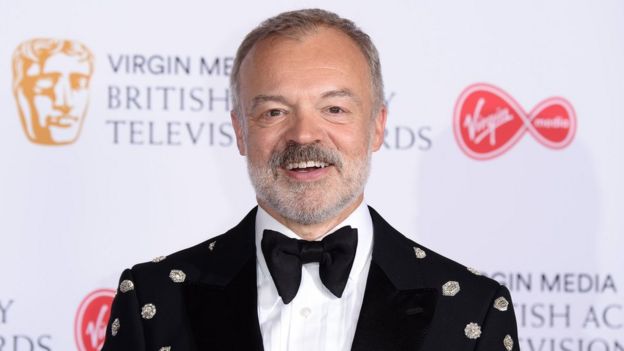
Every year, the television industry keeps its antennas crossed that the TV Baftas won't fall on the same weekend as Eurovision, so that Graham Norton is available to host.

2. Jodie Comer has a surprising link to Line of Duty
Jodie ComerImage copyrightGETTY IMAGES
Awards ceremonies always leave the biggest category of the night to the very end. The Oscars with best picture, for example.
So it was telling that Bafta considered best actress the tastiest category of the night this year, leaving it to last.
"Women are fashionable at the moment, so it's just great to be associated with them," said Steve Coogan as he introduced it.
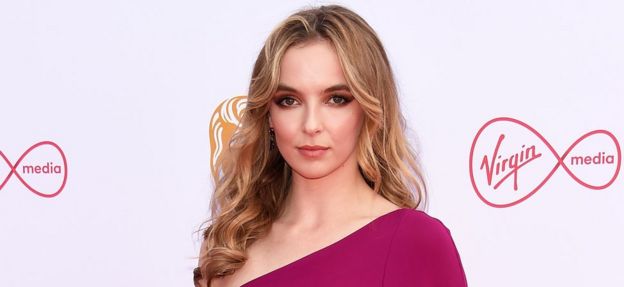
Sandra Oh and Keeley Hawes were among the nominees in this one, but it was Jodie Comer who triumphed.
"It's just a dream, I'm very emotional, I think I blubbed my way through [my acceptance speech]," Comer said backstage.
In her speech, she thanked Line of Duty star (and fellow Liverpudlian) Stephen Graham, adding: "If I didn't owe you a pint before, I certainly do now."
Many viewers didn't realise the two had a connection, but it was Graham who encouraged his agent Jane Epstein to take on Comer after they worked together on BBC mini-series Good Cop, describing her as an "extreme talent".

short presentational grey line

3. David Walliams wants X Factor to die
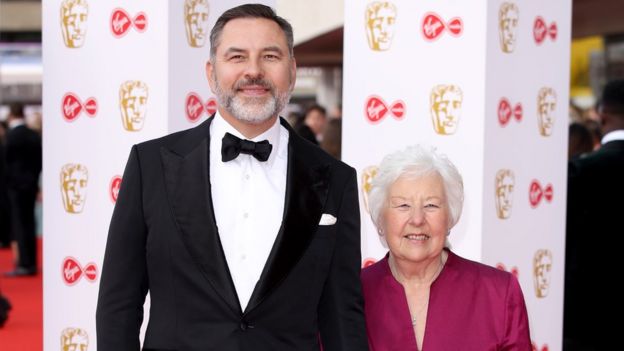
David WalliamsImage copyrightGETTY IMAGES
Image captionDavid Walliams brought mum Kathleen to the ceremony
"Thank you for that seated ovation. You're so thrilled for us, I can feel it," joked David Walliams as he entered the press room to an admittedly half-hearted round of applause.
He was fresh from accepting the prize for best entertainment programme on behalf of Britain's Got Talent.
And by the sounds of it, Walliams is very happy where he is - although he is considering Simon Cowell's offer to take part in Celebrity X Factor later this year.
"Well, I think if I can kill that format forever by appearing on it, I'd very much like to," Walliams said, speaking on behalf of the nation.
"I cannot sing a note so I'd fit in very well... I would love to be on that stage, doing a duet with Wagner."
short presentational grey line

4. Villanelle may have been loosely based on Scary Spice
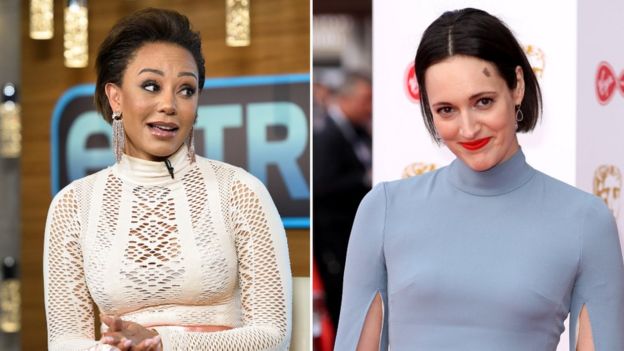
Mel B and Phoebe Waller-BridgeImage copyrightGETTY IMAGES
Phoebe Waller-Bridge has become just about the hottest property in entertainment in the last year.
In addition to adapting Killing Eve for the small screen, the second season of her hugely popular comedy Fleabag has just concluded, and she has also co-written the next James Bond film.
"I've made a promise to myself that I'm not going to talk about Bond tonight, I'm just going to talk about Killing Eve," she said backstage - a signal to journalists not to ask about anything 007.
So instead, she ended up discussing her love of the Spice Girls and their impact on her writing. Particularly her favourite, Scary Spice.
"It was because she was scary, a bit like Villanelle, perhaps I've never let Scary go," she explained.
"She was wild, she was out there, she didn't care about what people thought about her. She was just really cool. And wore trousers."
short presentational grey line

5. Huw Edwards probably isn't going to do Strictly Come Dancing after all
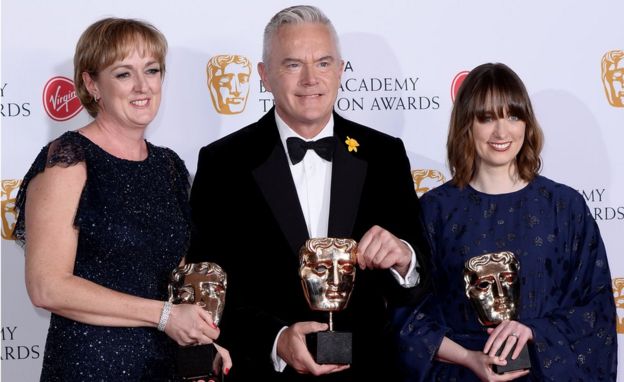

Huw EdwardsHuw EdwardsImage copyrightGETTY IMAGES
Planning for this year's Strictly is well under way, with DJ Chris Evans having already announced his candidacy.
BBC News host Huw Edwards has also been in the frame - having told Radio 2's Steve Wright earlier this year he would consider taking part.
But having had time to ponder it, Edwards appears to have decided against following in the footsteps of fellow news figures such as Jeremy Vine, Kate Silverton and John Sargeant.
"The honest answer is I've not been asked. If I were asked, I think I'd find it quite difficult with the current job I'm doing," he explained.
"Combining that with being the BBCs chief news anchor, that would be quite difficult. In future, when my professional life might be in a different shape, I'd consider it."
Edwards and his team took home the Bafta for live event for the coverage of the Royal British Legion Festival of Remembrance.
short presentational grey line

6. Daisy May Cooper trashed the red carpet
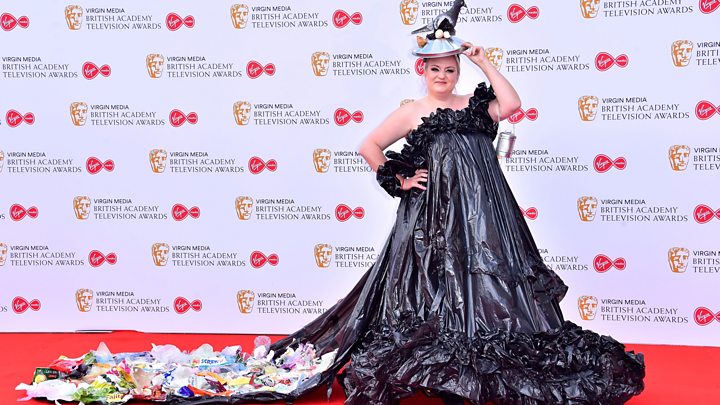
Media captionThis Country star's bin bag Bafta dress explained
Jaws were dropping on the red carpet for the likes of Keeley Hawes and Jodie Comer, both of whom wore stunning dresses.
But it was This Country star Daisy May Cooper who caught the most attention, with her bin bag ensemble.
It was so extravagant it wouldn't have looked out of place at last week's Met Gala.
How much did it cost? "About five quid," she laughed, adding it was made by her mum.
But, Cooper explained, she chose this year to donate the money she would have spent on a dress to a food bank charity.
short presentational grey line

7. Mack (stuck in) the knife

Lee MackImage copyrightGETTY IMAGES
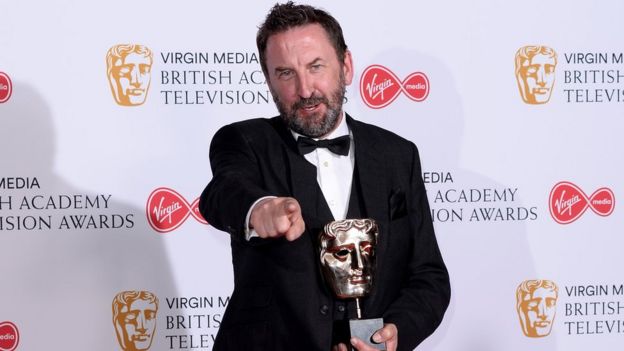
Lee Mack, who won best entertainment performance for Would I Lie To You?, delivered one of the night's highlights, poking fun at both his co-stars and Bafta's own sponsor in his speech.
"Right, I'll keep it brief because I know we just want to go for dinner now," he began.
"Especially this year, because there's no chocolate under the seat. Are we still on BBC One, or is it Channel 5 now?"
He continued: "Thanks for this, I don't want to sound ungrateful, but on the off-chance that we do get to come back next year, is there any chance you couldn't do it on the same day as the final Premier League game?
"I'm only kidding, I couldn't have watched it anyway because I've got [Bafta sponsor] Virgin Media and the reception is terrible."
Paying tribute to his co-stars Rob Brydon and David Mitchell, he joked: "It's bad enough I get paid more than them, but this is going to kill them."
short presentational grey line

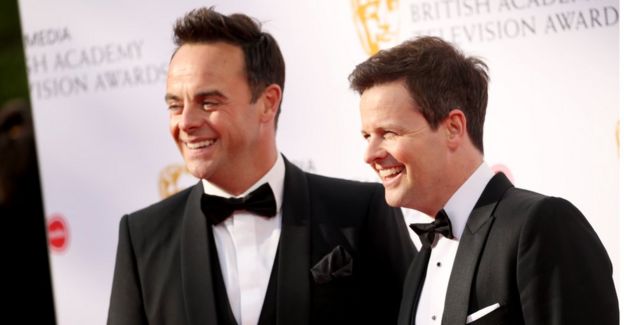
8. Dec the halls with lots of Baftas

Ant and DecImage copyrightGETTY IMAGES
Love Island won the prize for best reality and constructed factual last year, but bizarrely wasn't even nominated this year despite having its biggest series yet in 2018.
Instead, I'm A Celebrity... Get Me Out Of Here! took home the prize, in a year that saw Holly Willoughby replace Ant McPartlin as a co-presenter on the show.
"Holly came in and did a fantastic job, she loved it and we loved having her there," Dec said backstage.
"It was a tough year. Personally and professionally. But I just went out and tried to do my best, keep the shows warm for him when he was ready to come back, so I tried to deliver as best I could."
Britain's Got Talent also triumphed, despite the fact Dec had to host the live shows solo after Ant McPartlin's drink-drive conviction.
"And thankfully," he laughed, "they both won Baftas tonight, so how cool am I?!"
After last year's clash, Norton returned to fronting the Bafta ceremony on Sunday and delivered a killer opening sequence true to form. His best jokes included:
  • "We now have a female host of Question Time, an all-female line-up on Newsnight. It's not only great for equality, but it saves the BBC a fortune."
  • "Every week on The Great British Bake Off, a Baker gets kicked out. This week it was Danny. Literally a show stopper."
  • "The Bros documentary really was must-see television. A lot of people have argued about which one emerged with the most dignity. I would say on balance it was probably the bassist, Craig, who declined to take part."
  • "Everyone loved Line of Duty. The interviews were incredible. A more forensically detailed interrogation of times, dates and mobile phone data hasn't been seen since that time Seann Walsh got home late from Strictly practice."

Heart deaths up for first time in 50 years

Health reporter(wp/bbc):::
Deaths from heart and circulatory diseases among people under 75 is on the rise for the first time in 50 years, UK figures show.
The British Heart Foundation (BHF) says increasing rates of diabetes and obesity are partly responsible.
In 2017 there were 42,384 deaths in under-75s from heart and circulatory conditions, up from 41,042 in 2014.
The charity says the historic pace of progress in reducing these deaths "has slowed to a near standstill".

Risk factors

Heart and circulatory diseases remain a leading cause of death in the UK, with millions at risk because of conditions like high blood pressure.
Other risk factors include high cholesterol, obesity, diabetes, smoking and family history.
According to the charity's report, more than 14 million adults have high blood pressure but nearly 5 million do not know it because they have yet to be diagnosed.
And around 15 million, or one in every four, adults in the UK is obese.
Over the last five years the UK has seen an 18% increase in people diagnosed with diabetes. Circulatory diseases include stroke and diseases of the arteries.

Tackling heart disease

Historically, the UK has made great strides at treating and preventing heart disease, thanks to better prevention - getting more people to stop smoking, for example - and new treatments.
The BHF says a slowdown in the rate of improvement in death rates combined with a growing population is partly to blame for the reversal it is now seeing.
Between 2012 and 2017, the premature death rates for heart and circulatory disease in the UK fell by just 9%, compared with a fall of 25% between 2007 and 2012.
Simon Gillespie, chief executive at the BHF, said: “In the UK we’ve made phenomenal progress in reducing the number of people who die of a heart attack or stroke.
"But we’re seeing more people die each year from heart and circulatory diseases in the UK before they reach their 75th, or even 65th, birthday. We are deeply concerned by this reversal.
“Heart and circulatory diseases remain a leading cause of death in the UK, with millions at risk because of conditions like high blood pressure and diabetes.
"We need to work in partnership with government, the NHS and medical research community to increase research investment and accelerate innovative approaches to diagnose and support the millions of people at risk of a heart attack or stroke."

Facial recognition tech 'should be dropped over race issues'

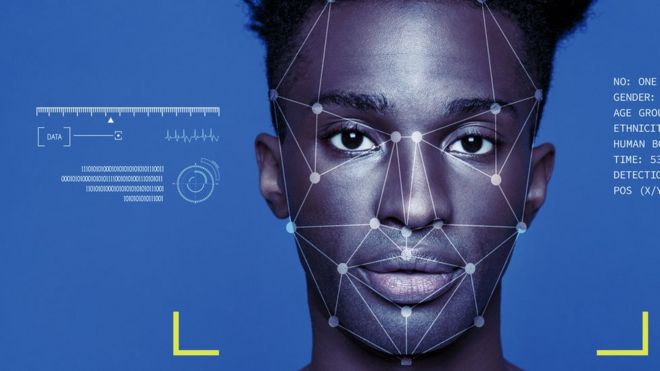
Facial scan
Pic-Police facial recognition systems have been shown to do poorly when analysing non-white faceswp
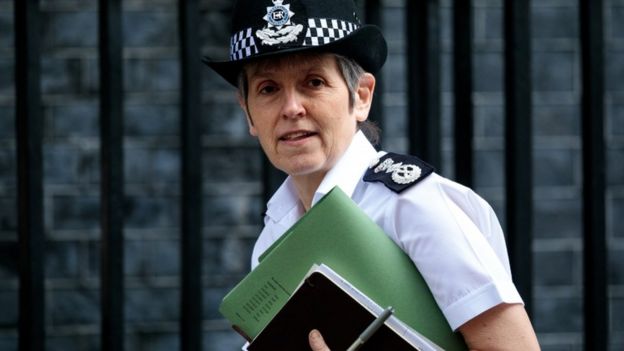
Metropolitan police commissioner Cressida Dick
Pic-Met police boss Cressida Dick said she use of facial recognition was "lawful and appropriate"/wp
Crime /IT  reporter(wp/bbc):::
Black and minority ethnic people in the UK could be falsely identified and questioned as police have not tested facial recognition systems on enough non-white faces, say campaigners.
At least three chances to assess how well the systems deal with ethnicity were missed over the past five years, the BBC found.
Campaigners said the tech had too many problems to be used widely.
"It must be dropped immediately," said privacy rights group Big Brother Watch.

Lost lesson

Several UK police forces have been trialling controversial new facial recognition technology, including automated systems which attempt to identify the faces of people in real time as they pass a camera.
Documents from the police, Home Office and university researchers show that police are aware that ethnicity can have an impact on such systems, but have failed on several occasions to test this.
The Home Office said facial recognition can be an "invaluable tool" in fighting crime.
"The technology continues to evolve, and the Home Office continues to keep its effectiveness under constant review," a spokesman told the BBC.
The ability of facial recognition software to cope with black and ethnic minority faces has proved a key concern for those worried about the technology, who claim the software is often trained on predominantly white faces.
Minutes from a police working group reveal that the UK police's former head of facial recognition knew that skin colour was an issue. At an April 2014 meeting, Durham Police Chief Constable Mike Barton noted "that ethnicity can have an impact on search accuracy".


He asked CGI, the Canadian company managing the police's facial image database, to investigate the issue, but subsequent minutes from the working group do not mention a follow-up.
Facial recognition was introduced on the Police National Database (PND), which includes around 13 million faces, in 2014.
The database has troubled privacy groups because it contains images of people subsequently cleared of any offence. A 2012 court decision ruled that holding such images was unlawful.
The "unlawful" images are still held on the PND. The government is currently investigating ways to purge them from the system.
Despite this, the PND facial recognition system, provided by German company Cognitec, has proved very popular.
The number of face match searches done on the PND grew from 3,360 in 2014 to 12,504 in 2017, Freedom of Information requests to the Home Office have revealed.
In 2015, a team of assessors from the Home Office tested the PND facial search system, using about 200 sample images. They had identified ethnicity information about the sample photos but, once again, failed to use this opportunity to check how well the system worked with different skin colours.
The same Home Office report also estimated that, across the entire PND, about 40% of the images were duplicated.
It noted that this meant the UK government has overpaid hundreds of thousands of pounds to Cognitec, because the company charges more once the number of images (or "templates") on the database exceeds 10 million.
The Home Office assessment also found the facial recognition system was only half as good as the human eye. It said: "Out of the initial 211 searches, the automated facial search of PND identified just 20 true matches, whereas visual examination by the tester identified a total of 56 matches."
Cognitec declined to comment on costs, but said its matching technology had improved since the Home Office report, and that facial recognition results always required review by a human.


A spokesman for the National Police Chiefs Council said the technology had the potential to disrupt criminals, but said any roll-out must show its effectiveness within "sufficient safeguards". It added that work is being done to improve the system's accuracy and remove duplicates.
Another chance to check for racial bias was missed last year during trials by South Wales of real-time facial recognition software, which was used at sports events and concerts. Cardiff University carried out an assessment of the force's use of the technology,
That study stated that "due to limited funds for this trial", ethnicity was not tested.
Cardiff's report noted, however, that "during the evaluation period, no overt racial discrimination effects were observed", but said this may be due to the demographic make-up of the watch lists used by the force.
In addition, an interim report by a biometrics advisory group to the government considering ethical issues of facial recognition highlighted concerns about the lack of ethnic diversity in datasets.
Under-representation of certain types of faces, particularly those from ethnic minorities, could mean bias "feeds forward" into the use of the technology, it said.
Silkie Carlo, director of campaign group Big Brother Watch, said: "The police's failure to do basic accuracy testing for race speaks volumes.
"Their wilful blindness to the risk of racism, and the risk to Brits' rights as a whole, reflects the dangerously irresponsible way in which facial recognition has crept on to our streets."
Big Brother Watch is currently taking legal action against the Metropolitan Police over its use of automated facial recognition systems.

Jeremy Kyle Show suspended after guest death

Jeremy Kyle
Entertainment reporter(wp/bbc):::
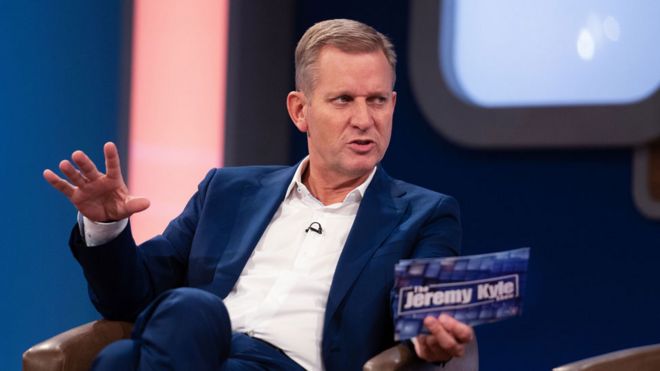
ITV has suspended The Jeremy Kyle show after a guest died shortly after filming, and is conducting a review into the episode "given the seriousness of this event".
The broadcaster took Monday's show off air and replaced it with a repeat of Dickinson's Real Deal.
The participant from the episode died a week after recording it.
ITV said everyone at the show is "shocked and saddened" and "thoughts are with the family and friends".

DNA tests and lie detectors

It will not screen the episode and said both filming and broadcasting were suspended with "immediate effect".
The show has been broadcast in its mid-morning slot since 2005. Its guests discuss relationship issues and conflicts with each other in front of Kyle's studio audience.
It is well-known for its often heated debates, with Kyle mediating between guests.
The show's website asks for participants to contact the programme to discuss issues involving DNA and lie detector tests, fighting with an ex over access to a child, feuding families, break-ups, relationship problems, bad parents, addictions, and reunions.
It is the most popular show on ITV's daytime schedule, with an average of one million viewers and a 22% audience share.
The show had been due to screen an episode with troubled ex-EastEnders star Danniella Westbrook as its guest on 14 May.

Further Brexit delay would hit UK economy - BoE's Broadbent

 Business&Economy(wp/reuters):::
Britain’s economy risks damage if Brexit is delayed beyond its latest Oct. 31 deadline because companies would continue to hold back on investment, Bank of England deputy governor Ben Broadbent was quoted as saying on Monday.
“It’s pretty clear that investment has been feeling the consequences of the uncertainty about Brexit and particularly the possibility of a bad outcome,” Broadbent told the Press Association news agency.
“If you continually expect news to arrive imminently - a resolution - then that can have quite a depressing effect on investment,” he said.
By contrast, a Brexit deal would lead to “quite a strong bounce-back in investment.”
Broadbent reiterated the BoE’s guidance that future interest rate increases would be limited and gradual, adding the “emphasis is on the ‘gradual’ bit of limited and gradual.”
He said he did know whether the British central bank would need to increase rates or cut them in the event of a no-deal Brexit shock to the economy.
“I don’t know. I really don’t, because I don’t know how much the exchange rate will move,” he said.
Several other top BoE officials, including Governor Mark Carney, have said a rate cut would probably be needed to help the economy weather the shock of leaving the European Union with no deal.
On whether he will put his name forward as a candidate to succeed Mark Carney as BoE governor, Broadbent said: It’s a big job...I have lots of things to think about before I make that decision.”

Brexit: Cross-party deal must include confirmatory vote - Sir Keir Starmer

Sir Keir Starmer
Pic-Sir Keir Starmer is leading Labour's negotiations with the government/AFP
Political reporter(wp/bbc):::
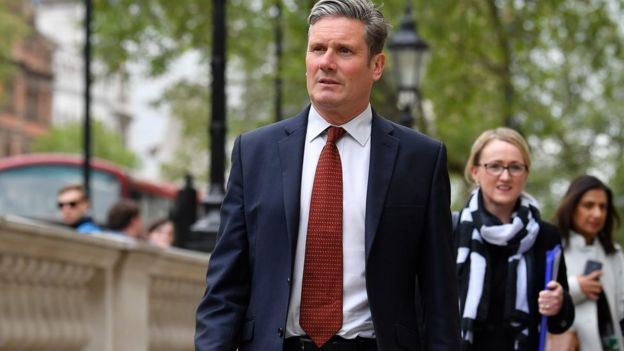
A cross-party Brexit deal will not get through Parliament unless it is subject to a fresh public vote, shadow Brexit secretary Sir Keir Starmer says.
Talks between Labour and ministers over leaving the EU have been going on for a month with little sign of progress.
Sir Keir told the Guardian that without a new referendum, up to 150 Labour MPs would vote against any agreement made.
Foreign Secretary Jeremy Hunt said it was a "crunch week" for the talks ahead of European elections on 23 May.
He said his view had not changed that another referendum would be a "betrayal" and everyone's focus should be on delivering on the result of the 2016 Brexit vote.
The UK was due to leave the EU on 29 March, but the deadline was pushed back to 31 October after MPs rejected Theresa May's proposed deal three times.
Talks between the government and Labour aimed at finding a way out of the impasse will resume at 17.00 BST with pressure growing on both sides to show progress or pull out.
No 10 said there was a "clear desire" to get on with the process. Asked if there was a deadline, a spokesman said "let's see where we get to this evening".
If there is no agreement, Theresa May has said she will return to Parliament and ask MPs to vote again on a range of possible options.
Parliament failed to unite behind a way forward in a series of "indicative votes" in March, but the PM says the government would now be prepared to accept whatever commands a majority if Labour does so too.
Sir Keir said he would not be afraid to end the talks as soon as this week if the prime minister did not budge on her so-called red lines - positions that she feels cannot be changed in the Brexit deal.
He suggested a referendum on the final deal had become a red line of its own for many Labour MPs, saying "a significant number, probably 120 if not 150, would not back a deal if it hasn't got a confirmatory vote".
Labour's stated policy is that it supports a further referendum on Brexit under certain circumstances.
It has rejected the idea of campaigning for one in any event, but will demand a public vote if it cannot get changes to the government's deal or an election.
However, deputy leader Tom Watson agreed that with so many of his fellow MPs wanting to give the public the final say, it would be very difficult to "enforce" any Brexit agreement without another vote.
"This will only work if two very strongly-held views are plugged together - Theresa May's deal and a confirmatory ballot," he told Radio 4's Today. "That is the way out of this."
Asked whether Labour wanted to leave or remain in the EU, he replied: "We are a remain and reform party," but "when it comes to a deal people can form their own view".
In a speech later marking the 25th anniversary of former Labour leader John Smith's death, Mr Watson will reflect on Mr Smith's pro-Europeanism and say he would have backed a "People's Vote".
On the European elections, he will say: "There are only two forces that can win... that nasty nationalism of the Farage Brexit Party, or the tolerant, compassionate outward-looking patriotism of the Labour Party.
"I can only plead with Labour supporters - don't stay at home, don't put that cross elsewhere, don't let them win."
The reality is these talks have been genuine, but very difficult.
Neither side wanted to pull the plug before the local elections 10 days or so ago.
But now, as time goes on, it may well be we are reaching the moment where they have to throw up their hands and say: "We just can't do it."
Jeremy Corbyn and Theresa May are both on lonely tightropes trying to get across the other side of this slow-moving crisis. I think they would both like it to be over with, maybe with a cross-party deal.
But the prime minister doesn't want to put a huge compromise on the table, she doesn't want another referendum. Jeremy Corbyn doesn't want to help out the government unless he can get genuine changes.
If neither of them feel they can really budge, well, the talks are not going to be able to succeed, and the government will then have to try to move on to votes in Parliament, the next part of the process.

Speaking ahead of a meeting of EU foreign ministers in Brussels, Mr Hunt said people voted in good faith in 2016 in the belief the result would be acted upon.
"People have been pessimistic right from the outset that these negotiations were not going to get anywhere but they have continued," he said.
"So we have to see what happens this week. This is a crunch week."

Labour's position on Brexit

June 2017 - Labour's general election manifesto accepts referendum result
March 2018 - Shadow Northern Ireland secretary Owen Smith sacked for supporting second referendum on final deal
September - Labour agrees if a general election cannot be achieved it "must support all options… including a public vote"
18 November - Labour leader Jeremy Corbyn says a new referendum is "an option for the future" but "not an option for today"
28 November - Shadow chancellor John McDonnell says Labour will "inevitably" back a second referendum if unable to secure general election
16 January 2019 - 71 Labour MPs say they support a public vote
6 February - Mr Corbyn writes a letter to Mrs May outlining five changes with no mention of a "People's Vote"
28 February - Labour says it will back a public vote after its proposed Brexit deal is rejected
14 March Five Labour MPs quit party roles to oppose a further referendum
27 March - The party backs a confirmatory public vote in Parliament's indicative votes on a way forward for Brexit
30 April - Party agrees to demand a public vote if it cannot get changes to the government's deal or an election, as it decides wording to EU election manifesto

May's party slumps to fifth place as pressure mounts for her to go

Political reporter(wp/reuters):::
Prime Minister Theresa May’s Conservatives have fallen to fifth place in an opinion poll ahead of the May 23 European parliamentary election as pressure grows for her to set a date for her own departure.
Nigel Farage’s Brexit Party was in the lead, up four percentage points, on 34% while May’s Conservative Party had just 10%, the YouGov poll for the Times newspaper showed. The opposition Labour Party was down five points on 16%.
Two parties which support staying in the EU, the Liberal Democrats and the Greens, were on 15% and 11% respectively.
The collapse in support for the Conservative Party is piling pressure on May to set a date for her departure. Senior Conservatives want May to set out her plans this week.
Nearly three years since the United Kingdom voted 52% to 48% to leave the European Union, there is still no agreement among British politicians about when, how or even if the divorce should take place.
“The reason I am back today doing what I am doing is because frankly we’ve been betrayed by our career political class,” Farage told TalkRadio.
“If the Brexit Party comes out on top in a couple of weeks time, we must have a place at the negotiating table with the government to help put together our strategy.”
Britain was due to have left the European Union on March 29, though May has been unable to get her divorce deal approved by parliament so she has turned to the Labour Party, led by socialist Jeremy Corbyn, in a bid to court his support.
Labour’s Brexit pointman, Keir Starmer, told The Guardian newspaper that any cross-party deal lacking a confirmatory referendum would not pass parliament as about 150 Labour lawmakers would oppose such a deal.

MAY CLARITY

May, who secured the leadership in the chaos that followed Britain’s 2016 vote to leave the European Union, has promised to step down if lawmakers back the deal she struck with Brussels to leave the bloc.
But the prime minister has lost heavily on three attempts to get it through parliament.
Graham Brady, chairman of the 1922 Committee, which can make or break party leaders, said that May had been asked to give “clarity” about her future at a meeting this week.
The new deadline for leaving the EU is Oct. 31 though many Brexit supporters fear that the whole divorce could be derailed.
“We are at real risk of sleepwalking into remaining in the EU,” Brexit Secretary Steven Barclay wrote in the Sun newspaper.
“That is why I believe that it would be inexcusable for the Government to not use the coming months to continue to prepare for the real risk we leave the EU without a deal.”
He later wrote in Twitter that in a choice between a no-deal exit or staying in the EU, he would vote to leave without agreement.