Wednesday, 19 June 2019

Tory leadership race: Rivals in BBC debate clash over Brexit deadline

Political reporter(wp/bbc):::
Tory leadership rivals have clashed in a live BBC TV debate on whether the UK can leave the EU, no matter what, by the 31 October deadline.
Asked for a guarantee he would do this, Boris Johnson described the deadline as "eminently feasible".
Sajid Javid said it "focused minds", but Michael Gove and Jeremy Hunt said extra time might be needed.
Rory Stewart accused his colleagues of lacking realism - of "staring at the wall and saying 'believe in Britain'".
The five men vying to be Conservative Party leader - and the UK's next prime minister - were taking part in a live televised debate on BBC One.
Former Brexit Secretary Dominic Raab was earlier eliminated in the second round of voting, when Conservative MPs held a secret ballot.
On Wednesday, the third round of voting will take place between 15:00 and 17:00 BST. The result is expected at 18:00 and the MP with the lowest number of votes will be out of the race.
During Tuesday's hour-long debate, all five men ruled out calling a general election until Brexit was resolved.
But the encounter exposed divisions in their approaches to Brexit and whether they could accept the UK leaving the EU without an agreement.
The candidates, who faced questions from members of the public on issues ranging from climate change to Islamophobia, also disagreed over whether to prioritise tax cuts or increased spending on public services after the UK leaves the EU.
Mr Johnson, the frontrunner in the contest, was taking part in his first debate of the campaign after he skipped Sunday's Channel 4 encounter.

How candidates' Brexit plans stacked up

The former foreign secretary said the British people were "fed up" with the current deadlock over Brexit and the Tories would pay a "really serious price" if this continued.
He warned of a "catastrophic loss of confidence in politics" if the latest Brexit deadline was not met. Asked if he could guarantee this, he replied that "October 31 is eminently feasible".
"If we allow 31 October to come and go as we let March come and go, I think the public would look on us with increasing mystification," Mr Johnson said.
He also suggested there was no issue with continuing free trade after Brexit - citing something called Article 24 of GATT - but as BBC Reality Check points out, that relies on the UK and EU both signing up and in the event of no deal, that will not happen.
Mr Javid, who came fifth in Tuesday's second round of voting, said a deadline was needed to "focus minds" in both the EU and the UK.
"We have to learn from our mistakes," he said. "One of the mistakes we have made is having a flexible deadline."
He suggested the route to getting a Brexit deal through Parliament was by re-presenting Theresa May's Withdrawal Agreement but without the controversial Irish backstop.
Mr Gove said an "arbitrary" deadline was counter-productive and if he was prime minister he would be prepared to delay Brexit by a matter of days to finalise a deal.
"You sometimes have extra time in football matches in order to slot home the winner."
Mr Hunt said he would back a no-deal exit as a "last resort" but if the UK was close to finalising a deal with the EU he would extend the talks to prevent the disruption a no-deal exit would cause to business.
Both Mr Hunt and Mr Javid suggested new technology could potentially solve the intractable Irish border issue, but the EU has said there is currently none in use anywhere in the world that can keep it as open after Brexit as it is now link
Mr Stewart said he would not allow a "damaging and unnecessary" no-deal exit and his rivals could not explain how they could possibly do this "against the consent of Parliament".
He suggested he was seeking the most realistic "door" out of the EU while "everyone else was staring at the wall and saying believe in Britain".

What Europe made of the debate

EU politicians across the continent were dipping in and out of the debate. The comments I've heard so far off-the-record have not been particularly complimentary.
The EU simply thinks that most of those leadership candidates are not being realistic.
EU leaders are preparing a united, determined front when it comes to the idea of renegotiating the Brexit deal, and the answer is no.
Even if, come the autumn, the EU were to be tempted to reopen some of those questions such as the Irish backstop, those conversations could never be finished by 31 October - the date by which most of those leadership candidates want to leave the EU.
That's why this evening the EU thinks the idea of a no-deal Brexit is becoming increasingly likely.

Presentational grey line

Tax plans also a dividing line

Moving beyond Brexit, the candidates clashed over their economic plans and whether to prioritise higher spending on public services or tax cuts.
There were sharp exchanges between Mr Stewart and other contenders, Michael Gove accusing him of having "no plan" for how to run the economy or public services.
"Bringing people together is not enough," he told Mr Stewart, who has emerged as the surprise contender in the race.
However, after the debate Mr Stewart admitted his performance had been lacklustre, adding he did not think the "strange" format worked for him.
Mr Gove also took aim at Mr Johnson's plans to give a tax cut to those earning more than £50,000 a year, saying the focus should be on "helping the poorest in society".
Helping middle-earners was "sensible", Mr Johnson responded.
Mr Stewart said promising tax cuts was "wrong" given the uncertainty around Brexit.
He called for a "revolution" in care for the elderly, calling current provision a "disgrace".
Mr Hunt, who was health secretary for six years, also called for increased investment, suggesting cuts to care budgets under the current government had gone "too far".
Mr Johnson reiterated that it was his "ambition" to cut taxes for higher earners, but as Chris Mason pointed out, that seemed less committal than a "promise" to do it.
Meanwhile, speaking to Newsnight after the debate, Mr Gove said he believed he had won the debate because of what he said were his "detailed answers" and "clear plan" on Brexit.
Of his rivals, he said there were "some other great people" but added: "They will all be fantastic members of my team."

Challenge over Islamophobia

Amid claims that the Conservatives have failed to tackle Islamophobia in the party, the candidates were pressed by an imam to accept that "words have consequences".
Mr Johnson said he apologised if anything he had written, during 20 to 30 years as a journalist, or had said during his political career had caused offence.
But he defended his conduct as foreign secretary in relation to the case of Nazanin Zaghari-Ratcliffe, who remains in jail in Iran on spying charges.
He suggested his claim in 2017 that the dual British-Iranian national was actually working as a journalist in the country - which the Iranian authorities cited as a reason to increase her sentence - "did not make any difference".
"If you point the finger at the UK, all you are doing is exculpating those who are truly responsible," he said.
Mr Javid challenged the other candidates to agree to an external inquiry into Islamophobia in the Tory Party - which they all appeared to do.
Referring to Donald Trump's string of attacks on London's Muslim mayor Sadiq Khan, he said politicians should be "brave enough" to call out Islamophobia wherever it came from.

Woman, 83, in hospital after William and Kate convoy crash

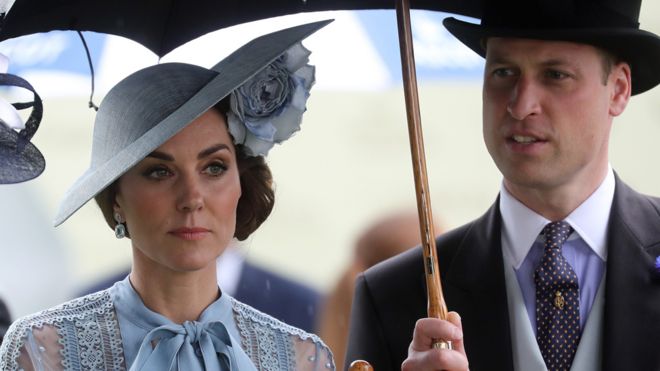
Britain"s Catherine, Duchess of Cambridge and Prince William, Duke of Cambridge at Ascot
Pic:::The royal couple have sent their best wishes to the woman, called Irene/wp/bbc
Royal correspondent(wp/bbc):::
An elderly woman is in a serious condition in hospital after a road accident involving the Duke and Duchess of Cambridge's police escort.
Prince William and Kate were travelling from London to Windsor when the woman, 83, was hurt on Monday.
The accident involved a marked police motorbike in the convoy, and the police watchdog is now investigating.
Kensington Palace said the royal couple are "deeply concerned and saddened" and have been in touch with the woman.
The woman - who is called Irene, according to the palace - was taken to hospital in a critical condition following the collision on Upper Richmond Road in Richmond, south-west London at around 12:50 BST on 17 June.
She is now in a serious but stable condition in hospital.
A Kensington Palace spokesperson said: "Their Royal Highnesses have sent their very best wishes to Irene and her family and will stay in touch throughout every stage of her recovery."
The duke and duchess are understood to have sent flowers to the woman.

Investigation launched

Watchdog the Independent Office for Police Conduct (IOPC) said it is investigating the circumstances of the collision after it was referred to them by the Metropolitan Police as is "in line with procedure".
An IOPC spokesman said: "Our staff attended the scene of the incident and after careful consideration, we have launched an independent investigation.
"The investigation is in its very early stages and the officer involved is assisting our enquiries as a witness.
"Our immediate thoughts are with the injured woman and her family and those affected by the incident."
Prince William and Kate were on their way to Windsor for the St George's Chapel service commemorating the Order of the Garter.
In January, the Duke of Edinburgh, 98, was involved in a car crash while driving near the Queen's Sandringham estate.
Prince Philip flipped his Land Rover Freelander after colliding with a Kia car as he pulled out on to the A149 in Norfolk.

Teenager who called Prince Harry 'race traitor' is jailed

Royal correspondent(wp/reuters):::
A teenage neo-Nazi who called for Britain’s Prince Harry a race traitor months after his marriage to U.S. actress Meghan Markle and suggested he should be shot was jailed for more than four years on Tuesday, the BBC reported.
Michal Szewczuk, 19, posted far-right online propaganda which included an image of Harry, the Duke of Sussex, with a gun to his head with the caption “See Ya Later Race Traitor”.
It was posted months after his wedding to Meghan, whose mother is African American and father is white.
Szewczuk and his co-defendant Oskar Dunn-Koczorowski, 18, both Polish nationals, pleaded guilty to encouraging terrorism and Szewczuk also admitted five counts of possessing material likely to be useful to someone planning a terrorist act.
“Dunn-Koczorowski and Szewczuk clearly see themselves as superior to the majority of society and they feel there duty is to express their beliefs, in turn teaching others,” Detective Chief Superintendent Martin Snowden, head of counter-terrorism policing in northeast England.
“The considerable amount of material they have posted on social media channels not only reflects their extremist beliefs but was intended to encourage others to carry out despicable acts.”
Szewczuk was jailed for four years and three months while Dunn-Koczorowski was sentenced to 18 months in prison.
Other posts by the men included support for Norwegian far-right mass killer Anders Breivik and backing for the neo-Nazi group, Sonnenkrieg Division.

Oxford University accepts £150m

Image result for oxford universities images
Pic:::Univesity of Oxford-wp
University reporter,oford(wp/bbc):::
The largest single donation to a UK university has been given to Oxford for a new institute that will study the ethics of artificial intelligence.
Stephen Schwarzman, a US private equity billionaire who has advised Republican presidents including Donald Trump, has given the university £150m.
A new building for the study of humanities will house the institute.
The UK government said it was a "globally significant" investment in Britain.

Governments 'utterly unprepared'

At a time when universities face uncertainty over research funding because of Brexit, this is a major financial coup for the University of Oxford.
Mr Schwarzman, the chief executive of the private equity firm Blackstone, is one of America's best known billionaires.
In the past, his lavish lifestyle as a Wall Street financier has attracted criticism, but more recently he has also become a major donor to education.
Mr Schwarzman told the BBC he was giving the money to Oxford because artificial intelligence was the major issue of our age.
"At the moment, most governments are utterly unprepared to deal with this, and why would they be, it's a different type of technology," he said.
"They're going to have to rely on great universities like Oxford, and others around the world who specialise in helping them think this through."
Mr Schwarzman said universities needed to help construct an ethical framework for changes that were happening rapidly.
Some economists have warned the expansion of artificial intelligence could have a significant impact on society - including the loss of jobs due to automation - in what is sometimes called the "fourth industrial revolution".
Academics have also raised concerns about the potential for malicious use in cyber warfare and the subverting of democracy.
The donation by Mr Schwarzman to Oxford follows a $350m (£279m) gift he made to the Massachusetts Institute of Technology (MIT) to establish a centre for computing and artificial intelligence.
The study of the ethics of AI at Oxford will be in a new humanities centre, bringing together subjects from languages to philosophy.
Mr Schwarzman said it was "important for people to remember what being human is".
"Why are we here? What are you values? How does technology deal and interact with that.
"We should want it to be positive and productive for society, and technology can't be allowed to just do whatever it wants because it can. "
Accepting large donations is not without risk for institutions if controversy emerges later.
Prof Louise Richardson, the vice-chancellor of the University of Oxford, said all philanthropic gifts were reviewed to make sure they fitted with its values.
"The margin of excellence requires more than we can expect from public funding, so philanthropy is going to become more important for Oxford and other universities," she said.
The new building will also create a concert hall and other public spaces.

Brexit campaigner Boris Johnson advances on Britain's top job

political reporter(wp/reuters):::Brexit campaigner Boris Johnson took a step closer to becoming Britain’s next prime minister on Tuesday, winning 40 percent of votes in the second round of a contest on a firm promise to leave the European Union by Oct. 31.

Johnson, the face of the official Brexit campaign in the 2016 referendum, won 126 out of 313 votes and so goes through to a third ballot between 1400 GMT and 1600 GMT on Wednesday with four other candidates who won 33 votes or more.
The former foreign minister was far ahead of the rest of the pack, stretching a lead which, for many, makes Johnson the all but inevitable victor to replace Prime Minister Theresa May and take on Britain’s so far ill-fated Brexit negotiations.
At a sometimes ill-tempered BBC debate, Johnson repeated his pledge that he would take Britain out of the EU by Oct. 31, again saying the only way to do so was to prepare for a so-called no deal exit and concentrate on winning a new trade deal.
“We must come out on the 31st of October because, otherwise I am afraid we face a catastrophic loss of confidence in politics,” Johnson said.
“October 31 is eminently feasible. Let me just say if we now say that we have a deadline that is not a deadline and we allow October 31 to come and go as March came and went and April came and went I think the public will look upon us with increasing mystification.”
With Johnson so far ahead, the race is on for second place, with Foreign Secretary Jeremy Hunt, Environment Secretary Michael Gove, International Development Secretary Rory Stewart and Home Secretary Sajid Javid all trying to prove they would be his toughest challenger.
The remaining five will now face votes until the race is whittled down to two candidates, who will face a postal ballot of the Conservative Party’s largely pro-Brexit members. A new prime minister should be chosen by the end of July.
At the debate, the four other candidates - after former Brexit minister Dominic Raab was knocked out - tried to test Johnson, a former London mayor who has so far been relatively silent in the campaign, even avoiding an earlier debate.

SORRY

Almost three years since Britain voted to leave the EU, the country, parliament and both main parties are deeply divided over how, when and even whether Brexit should happen.
With a simple message similar to the soundbites he used in the 2016 referendum campaign, Johnson, who unlike other politicians is better known by his first name, has managed to persuade much of his party that only he can rescue it from electoral disaster by delivering Brexit.
But he has attracted criticism from his rivals for promising to cut income tax for high earners.
In Tuesday’s debate, Johnson was also taken to task for past comments in which he offended Muslims, women and others.
“In so far as my words have given offence over the last 20 or 30 years when I’ve been a journalist and people have taken those words out of my articles and escalated them... of course I am sorry for the offence they have caused,” he said.
His rise towards Downing Street is the latest twist in an eventful career for a man whose quick wit and eccentric style have helped him shrug off a series of scandals, including getting sacked from the party’s policy team while in opposition for lying about an extra-marital affair.
That and other episodes earned him the tabloid nickname “Bonking Boris”. But where others would have floundered, Johnson became increasingly popular, culminating in his two victories in usually left-leaning London’s mayoral contests in 2008 and 2012.
After helping to win the Brexit referendum for the Leave side in 2016, Johnson’s bid to succeed David Cameron as prime minister was scuppered when his close ally Gove abruptly deserted him and announced his own candidacy.
The betrayal by Gove, whose parting shot was to say that “Boris cannot provide the leadership or build the team for the task ahead”, stopped Johnson’s march on Downing Street in 2016, allowing May to win the top job.
But her failure to get a divorce deal ratified by the British parliament destroyed her premiership.

Sunday, 16 June 2019

Theresa May calls for mental health to be priority

Theresa May
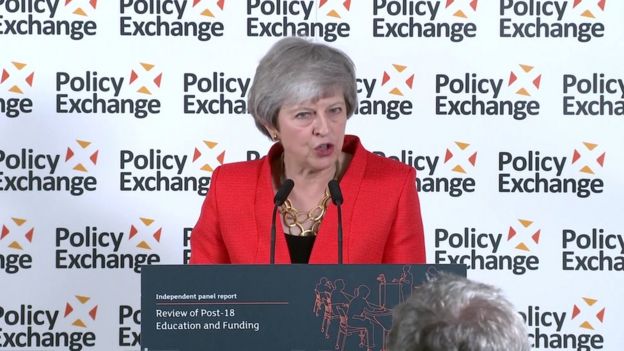
Pic--Theresa May has announced plans for tuition fees - and could still make announcements on school funding
Political&Health reporter(wp/bbc):::
Theresa May, using some of her remaining political authority before leaving office, has called for improvements in preventing mental health problems.
The prime minister wants new teachers to be trained how to spot children with mental health difficulties.
"Too many of us have seen first-hand the devastating consequences of mental illness," says Mrs May.
Labour's Barbara Keeley said the prime minister only offered "warm words".
The shadow minister for mental health said the "reality" was support services being "stretched to breaking point".

'Personal priority'

Mrs May, having stepped away from debates about Brexit, is using her last days in office to focus on what she sees as key domestic issues.
"We should never accept a rise in mental health problems as inevitable," says Mrs May, calling for early intervention.
"Tackling this burning injustice has always been a personal priority for me," said the prime minister, saying that preventing mental illness should get the "urgent attention it deserves".
She wants teacher training to include lessons in identifying children who might have mental health problems and to address issues such as self-harm.
At university level, there will be £1m for a competition to come up with innovative ideas to tackle mental health problems among students.
NHS staff will be encouraged to take suicide prevention training.
The prime minister also promised the publication of a White Paper setting out the government's response to Sir Simon Wessely's review of the Mental Health Act.

Wait for treatment

Sir Simon will be among those attending a roundtable discussion of his review on Monday, along with Health Secretary Matt Hancock and Simon Stevens, chief executive of NHS England.
The prime minister's efforts were praised by Paul Farmer, chief executive of Mind, the mental health charity."It's particularly positive to see such priority given to young people's mental health - our recent work in schools has shown us the true scale of the need," said Mr Farmer.
But Labour's shadow minister for mental health, Barbara Keeley, accused the prime minister of ignoring the "reality" of over-stretched budgets and delays in treatment.
"We know thousands of children and young people are either turned away from mental health services or have to wait too long for treatment," she said.

School funding

Mrs May, although having stepped down as Conservative party leader, remains as prime minister - and is said to still want to push ahead with ideas and policies that had been held back by Brexit.
Last month she launched the findings of a review into university and further education college funding.
She backed the report's call for a cut in fees to £7,500 in England and an increase in support for further education colleges.
There are believed to be plans for further announcements on education, with suggestions that funding plans to address school and college budget shortages could be brought forward.
Implementation will depend on her successor and the agreement of the Treasury, but Mrs May could still set out her plans for spending more on schools and colleges.
A Number 10 source said suggestions over the prime minister's education spending plans were "speculation".

Tory leadership race: Contenders clash over Brexit

Exclusive Political report(wp/bbc):::
Contenders to replace Theresa May as Conservative leader have clashed over delivering Brexit during a TV debate.
The MPs argued over whether a new deal could be renegotiated with the EU, and the prospect of a no-deal Brexit.
Leadership hopefuls appeared before a studio audience at a debate hosted by Channel 4 News in east London.
Boris Johnson came under fire for not taking part. He had defended his non-appearance, arguing debates with many guests "can be slightly cacophonous".
Some of the sharpest exchanges came over whether Parliament should be shut down in order to push through a no-deal Brexit by 31 October - something four of the five candidates argued against.
The UK had been due to leave the EU on 29 March, but EU leaders agreed to delay the date to October after MPs repeatedly rejected Theresa May's Brexit deal.
International Development Secretary Rory Stewart said proroguing Parliament was a "deeply disturbing" option and Home Secretary Sajid Javid warned "you don't deliver democracy by trashing our democracy."
However ex-Brexit Secretary Dominic Raab refused to rule it out, saying "every time one of these candidates take an option away… we weaken our chances of getting the best deal."

Who won the debate?

No stand-out winner and a debate that won't trouble the absent frontrunner Boris Johnson.
His team thought there was nothing to be gained from pitching up for this blue-on-blue skirmish which was mostly good natured but repeatedly raised questions the candidates struggled to answer.
How can the next prime minister renegotiate a deal with the EU? How can it be done by October? How could the UK leave without a deal if MPs refuse?
At one end of the debate, Dominic Rabb was rounded on for saying he would be prepared to try and suspend parliament if it was the only way to get the UK out without a deal at the end of October.
In the opposite corner, Rory Stewart was the only one who said a renegotiation with the EU in the next four months was a fantasy promise.
At some point this week one of the five will break out and become the challenger to Boris Johnson for the ballot of Tory members.
Presentational grey line

No-deal Brexit?

The candidates also argued over whether a no-deal Brexit should be considered.
Sajid Javid said no deal was the "last thing" he wanted but added: "You do plan for no deal precisely because you want a deal."
Dominic Raab said Britain would be able to "manage those risks" associated with leaving the EU without a deal.
However Mr Stewart said "I think a no-deal Brexit is a complete nonsense," adding "it would be deeply damaging for our economy."
BBC reporter Matt Cole said the warmest responses in the room seemed to be for Rory Stewart and the most testy exchanges were over Brexit.The candidates were united in condemnation of the Labour leader with Foreign Secretary Jeremy Hunt accusing Jeremy Corbyn of being "against aspiration".
Environment Secretary Michael Gove argued he was the candidate Mr Corbyn would be most scared of facing at Prime Minister's Questions.

The UK's next prime minister

'Where's Boris?'

Meanwhile, Foreign Secretary Jeremy Hunt attacked Mr Johnson for failing to appear at the TV debate.
"Where's Boris," he asked, adding "if his team won't allow him out with five fairly friendly colleagues, how is is he going to deal with 27 European countries".
Rory Stewart also made a pointed dig at his absent colleague, saying he hoped "one of us" - referring to the MPs who had attended the debate - becomes prime minister.
Speaking to Radio 4's World at One earlier, Mr Johnson said he was "pretty bewildered" by claims he was dodging scrutiny and said the public had had "quite a lot of blue-on-blue action, frankly, over the last three years".
He said the best time for a debate was on Tuesday after the second ballot.
Health Secretary Matt Hancock - who withdrew from the leadership race after the first ballot - has backed Mr Johnson "as the best candidate".
Writing in The Times, Mr Hancock said Mr Johnson "is almost certainly going to be our next prime minister" and called on Tory MPs "to unite behind him with a strong team".

Beyond Brexit

The TV debate also saw politicians being asked about their priorities apart from Brexit.
Sajid Javid chose funding education and further education colleges, saying: "We have cut back too much in that space."
Dominic Raab said he wanted to improve state schools and offer more choices for young apprenticeships, while Michael Gove said children would be his top priority and emphasised the importance of protecting the environment for the future.
Jeremy Hunt told the audience "every Conservative has two desires: cut taxes and spend more on public services." He also said he would focus on literacy and the social care system.
Rory Stewart said his central priority would be fixing adult social care, describing the issue as "the great unfinished revolution".

Biggest weakness?

Asked about their weaknesses, Michael Gove said he was impatient, while Dominic Raab said he was "a restless soul" who "always wanted to make things better".
Sajid Javid admitted to being stubborn while Rory Stewart said there were "many things he didn't know about the world". However, he added that "we need leaders who listen" and criticised "macho posturing".
Jeremy Hunt suggested others might say his biggest weakness was "getting my wife's nationality wrong" - referring to a time he got muddled about whether his wife was Chinese or Japanese.
The candidates will now go on to take part in further ballots until only two remain.
The final pair will be put to a vote of the 160,000 members of the Conservative Party from 22 June. The winner is expected to be announced about four weeks later.
Presentational grey line
On Tuesday 18 June BBC One will host a live election debate, hosted by Emily Maitlis, between the Conservative MPs who remain in the race.
The participants will face questions from viewers across the country via local TV studios.
If you would like to ask the candidates a question live on-air, use the form below. It should be addressed to all of them, not a specific politician.