Foreign Secretary Jeremy Hunt said he was hopeful that a breakthrough could be made in Brexit talks with the European Union this weekend, a day after officials said talks to amend Prime Minister Theresa May’s divorce deal made no headway.
Britain is due to leave the EU on March 29 but British lawmakers have rejected May’s deal and she is now seeking legally-binding changes before she takes her divorce deal back for a second vote in parliament by March 12.
“I wouldn’t have expected a breakthrough to have happened by now. What I would say is that compared to a month ago there is complete clarity on both sides as to what it will take to get an agreement through parliament,” Hunt told reporters after a giving a speech in Glasgow.
“Now there are very exhaustive discussions on both sides to try and find a way to achieve (a solution). Both sides want to find a way through this and we’re hoping for that success to happen this weekend in time for the vote.”
But Prime Minister Theresa May has insisted there is "no direct correlation".
Senior officers from the Metropolitan Police, Merseyside, Greater Manchester, West Midlands, South Wales, South Yorkshire and West Yorkshire will attend the meeting, as will representatives from the National Crime Agency and National Police Chiefs' Council.
Chairwoman of the NPCC Sara Thornton told BBC Breakfast that "emergency funding" was needed to tackle the problem.
"We need to have more officer hours on the streets," she said.
"We just haven't got the capacity, we just haven't got the officers at the moment so we need some money now to pay for overtime to pay for mutual aid between forces."
It comes after two 17-year-olds were killed in separate stabbings in London and Greater Manchester at the weekend.
Jodie Chesney was killed in an east London park as she played music with friends, and Yousef Ghaleb Makki was stabbed to death in the village of Hale Barns, near Altrincham.
Speaking about Yousef's death, Greater Manchester Mayor Andy Burnham said he supported an increase in the use of stop and search by police, even though it was "controversial".
"If there are more young people carrying knives, it follows there needs to be more people apprehended," he told BBC Radio Manchester.
Jodie's grandmother, Debbie Chesney, wrote on Facebook: "We don't want anyone else to go through what our family is suffering right now. This has to stop, there are too many young people having their lives cut short by needless violence."
In Lancashire, six people have been arrested over a gang attack at a sixth form college. A machete was found near Runshaw College in Leyland, following Monday's incident.
Theresa May told a Cabinet meeting on Tuesday that the killings of Jodie and Yousef were "absolutely appalling".
Her official spokesman said the Home Office would co-ordinate an urgent series of ministerial meetings and engagements to accelerate the work government was doing to support local councils and police.
Mrs May said the problem would require "a whole-of-government effort, in conjunction with the police, the wider public sector and local communities".
Meanwhile, Labour leader Jeremy Corbyn criticised the prime minister for saying there was no direct link between the cut in police numbers and the increase in violent crime.
Staff reporter(wp/reuters)::: A major London underground station shut down briefly on Tuesday because of a fire alert that proved to be a false alarm, hours after police said three parcel bombs had been sent through the mail to other transport hubs in the city.
Kings Cross St Pancras underground station, an interchange that serves two long-distance rail stations, closed for about half an hour after reports a fire had broken out.
“We believe that it was a hoax call at one of the fire points,” a Transport for London spokeswoman said, adding that investigations into the cause of the alert were continuing.
The European Union does not expect a Brexit breakthrough before the weekend, diplomats and officials said after talks in Brussels led by British Prime Minister Theresa May’s chief lawyer failed to produce a deal on Tuesday.
“It’s unlikely that there would be a deal before the weekend,” one EU official said. “We are preparing for a working weekend.”
Diplomats speculated that, should the EU and UK negotiators seal a deal over the weekend, May could come to Brussels on Monday to give it political endorsement and take it back to London just a day before the House of Commons votes on it.
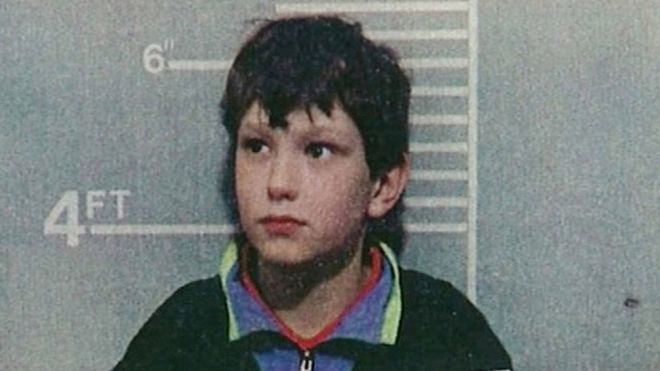
Pic--Jon Venables was 10 when he and Robert Thompson killed James Bulger
crime reporter(wp/bbc):::
The father of James Bulger has lost a legal challenge to try to change a lifelong anonymity order for one of his son's killers.
Ralph Bulger wanted information relating to Jon Venables' new identity to be made public, after he was jailed for possessing child abuse images.
Venables and Robert Thompson, both 10, killed the two-year-old in 1993.
Mr Bulger's lawyers argued information about Venables which was "common knowledge" should be made public.
However, president of the family division Sir Andrew McFarlane refused to change the terms of the order, which was designed to protect Venables from "being put to death".
Sir Andrew said: "There is a strong possibility, if not a probability, that if his identity were known he would be pursued resulting in grave and possibly fatal consequences."
Under the order, dating back to 2001, Venables and Thompson were granted lifelong anonymity and given new identities when they were released on licence.
Mr Bulger had argued certain details about Venables were easily accessible online.
The court was told that information included details of the killer's identities and former addresses up to 2017 and prisons where he had been detained.
Anyone sharing those details could face prosecution for contempt of court, under the injunction.
Upholding the injunction, Sir Andrew said: "My decision is in no way a reflection on the applicants themselves, for whom there is a profoundest sympathy.
"The reality is that the case for varying the injunction has simply not been made."
She said: "I've always said, I don't want them dead, because I don't want blood on my hands. I don't agree with killing someone.
"All I've ever wanted was justice for James and getting that justice would be them two going from young offenders to a proper prison and spend proper time in there."
A knife crime tsar must be appointed by government in order to "get a grip" on the rise in youth violence, a former Metropolitan Police commissioner says.
Lord Hogan-Howe said a 93% rise in the number of under-16s stabbed over five years was a "terrifying statistic" and "something has to change".
It comes after two 17-year-olds were killed in separate incidents in London and Greater Manchester at the weekend.
The home secretary will meet police chiefs this week to discuss the issue.
Prime Minister Theresa May said she recognised people's concern, but insisted there was "no direct correlation" between the rise in knife crime and a fall in police numbers.
Home Secretary Sajid Javid condemned the "senseless violence", saying: "Young people are being murdered across the country, it can't go on."
The Met's Assistant Commissioner, Graham McNulty, said tackling violent crime "remains the Met's priority", adding officers from the violent crime unit worked extended shifts over the weekend.
He said: "The increased police presence has made a difference with officers conducting over 2,500 stop and searches in the last three days alone."
NHS data shows that the number of children aged 16 and under treated for stab wounds in England rose from 180 in 2012-13 to 347 in 2017-18.
Lord Hogan-Howe - who led the Met from 2011 to 2017 - said a tsar should be put in charge of how money is spent to tackle knife crime, rather than individual police forces - especially when it comes to officer recruitment.
"I'd want to know, week after week, when are you recruiting them? When do they arrive? When do they get trained? And when do they hit the streets?" he told the BBC.
"You want to know day-by-day what's going to get delivered. And I don't get that sense of grip.
"If it's not treated as a crisis, it will take another two years before we see action."
Tsars are unelected independent advisers to the government who help to shape policy on a range of issues from drug misuse to how to reinvigorate the high street.
Officers say Jodie's attacker was a black male in his late teens who stabbed her in the back without saying a word. There are no descriptions of a second suspect.
Jodie's family branded it a "totally random and unprovoked attack".
The Labour councillor for Heaton, Tele Lawal, who attended Jodie's sixth form college, told the BBC's Victoria Derbyshire programme: "She was a scout, loved by the community. To have a person like her taken away - is that not a wake-up call for our government?
"It shocks us all. For me as a councillor, what more can we be doing?"
Next steps
Lord Hogan-Howe said the government and police also needed to:
Tackle the supply of cocaine to the UK from Colombia and Mexico. As the supply has increased and the price has dropped, violence between dealers has intensified, he said
Deter young people from carrying knives. Too many are worried about being caught without a knife, not with one, he said, and the police need better technology than knife-detecting wands and arches to detect them
Combat deprivation, which he said was a common factor in knife crime across the country
Hazrat Umar, 17, was killed in Bordesley Green on Monday; Abdullah Muhammad, 16, died in Small Heath the previous week, and seven days earlier Sidali Mohamed, 16, was stabbed outside a college in Highgate.
Before you try to solve any problem, you need to know what's causing it. The Home Office says the spike in knife crime, and serious violence more generally, is largely being driven by disputes over drugs.
So, with the National Crime Agency, it's set up a co-ordination centre to focus efforts on disrupting supply and catching dealers.
But it's also clear many stabbings are not linked to drugs - they're part of a tit-for-tat cycle of street violence between gangs which breeds fear among young people and prompts them to carry weapons.
There's a consensus that fixing that requires a two-pronged approach. More visible and intrusive policing, such as stop-and-search, to suppress the problem, together with longer-term prevention work (known as the public health model) to identify and support those at risk of being drawn into violent gangs at an early stage.
Where there's disagreement is whether cuts to policing and other public services have played a role in the surge in violence. For ministers to acknowledge resources are a factor would mean admitting their policies contributed to the problem and providing funding to rectify it.
The Home Office set out a range of actions to tackle violent crime in October, including a £200m youth endowment fund and a consultation on a new legal duty to treat serious violence as a public health issue.
It also revealed plans for a consultation to adopt a new "public health" approach to tackling serious violence.
An extra £970m in police funding is also proposed for 2019-20 and the Offensive Weapons Bill, currently before Parliament, will introduce new offences to tackle knife crime and acid attacks.
But London's Deputy Mayor for Policing and Crime Sophie Linden said new money was not enough to make up for the millions of pounds of cuts to services that ensured young people did well at school and were not excluded.
"This is a complex problem. It's policing, it's youth services, it's working with parents. We need the government to step up," she said.
Home Office minister Victoria Atkins told BBC Radio 4's Today programme a week of national action in February took 9,000 knives from the streets and saw more than 1,000 arrests.
Business reporter(wp/reuters)::: Britain’s construction industry reported the first fall in activity in almost a year last month, as Brexit uncertainty and a slow housing market delayed new building projects. The IHS Markit/CIPS Purchasing Managers’ Index (PMI) fell to 49.5 in February from January’s reading of 50.6, the first time the index has been below the 50-mark that separates growth from contraction since unusually icy weather in March 2018.
The last time the reading was below 50 for reasons unrelated to the weather was in September 2017, and February’s number was at the bottom end of economists’ forecasts in a Reuters poll.
“The UK construction sector moved into decline during February as Brexit anxiety intensified and clients opted to delay decision-making on building projects,” IHS Markit economist Tim Moore said.
Britain remains at risk of leaving the European Union on March 29 with no transitional arrangements, though last week Prime Minister Theresa May said lawmakers would be able to vote to delay Brexit for a short period if they continued to reject the deal she agreed with Brussels last year.
Builders said they were experiencing some of the longest delays in getting construction materials since 2015, due to transport shortages caused by manufacturers stocking up on materials in case a no-deal Brexit disrupts imports.
Construction projects such as new homes and office space were also being put on hold as Brexit uncertainty slowed commercial decision-making and the housing market weakened, with knock-on effects for hiring.
Although Bank of England data last week showed a pick-up in the number of mortgages approved at the start of 2019, house prices have been flat over the past couple of months, according to figures from mortgage lender Nationwide Building Society.
Last year construction output rose by the smallest amount since 2012, up just 0.7 percent according to official data.
Construction makes up only 6 percent of Britain’s economy, but its volatility often means it has an outsize effect on the quarterly growth rate of the whole economy.