Saturday, 11 May 2019

Labour pledges £10 minimum wage for under-18s

Political reporter(wp/bbc):::
Labour will extend its plans for a higher £10 an hour minimum wage to include workers under the age of 18, party leader Jeremy Corbyn is to say.
Currently, under-18s are entitled to a minimum wage of £4.35 per hour, compared with £8.21 for over-25s.
But under a Labour government this "youth rate" for the minimum wage would be ended in 2020, Mr Corbyn will say.
One business group said there was "value" in having the minimum wage set by an independent group, as it is now.
Mr Corbyn had already pledged to raise the National Living Wage - a legally binding hourly rate for workers aged 25 and over - to £10 an hour next year, if Labour gained power.
He will say Labour's proposal would see workers aged 16 and 17 paid about £2,500 more a year.

'End this discrimination'

Speaking at a party gathering in Birmingham on Saturday, Mr Corbyn is expected to say: "Equal pay for equal work is hardly a controversial idea, so why are we discriminating against young people?
"You don't get a discount at the shops for being under 18.
"But if the person serving you on the other side of the counter is young, they could be on half the wage of their colleagues.
"It's time to end this discrimination. Young people's work should be properly valued, not exploited by employers to cut their wage bill. If they're doing the job, pay them the wage - the real living wage."

Minimum wage rates from April 2019

  • 25 and over: £8.21
  • 21-24: £7.70
  • 18-20: £6.15
  • Under-18: £4.35
  • Apprentice: £3.90

'Political football'

The national minimum wage came into law in 1998.
The rates are reviewed each year by the government which is advised by the independent Low Pay Commission.
Responding to Labour's proposals, a spokesperson for the business lobby group the Institute of Directors, said: "Minimum wage levels and age thresholds are the responsibility of the Low Pay Commission because there is value in having an independent, evidence-based approach.
"Politicians directly setting rates will always risk not taking full account of the implications for employers and jobs."
Matthew Percival, head of employment at the Confederation of British Industry, said: "The minimum wage is an important part of the UK labour market and must not be used as a political football.
"It owes its success to the Low Pay Commission, which is an expert, independent body that brings together business and trade unions to guide the national minimum wage.
"Youth rates play an important role in helping to reduce youth unemployment and should be retained."
Chris Philp MP, Conservative vice-chairman for policy, said: "Under the Conservatives, we have seen youth unemployment fall by half, the biggest increase in the minimum wage for under-25s in a decade and the economy continue to grow, giving young people the security of a better future."

Theresa May could set exit date this week - Sir Graham Brady

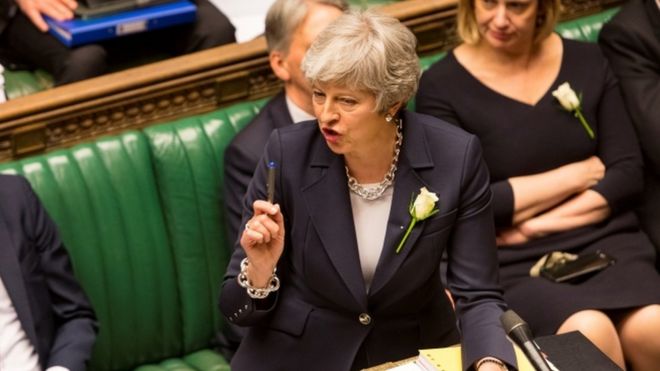
Theresa May

Pic-Theresa May has rejected calls to resign/reuters
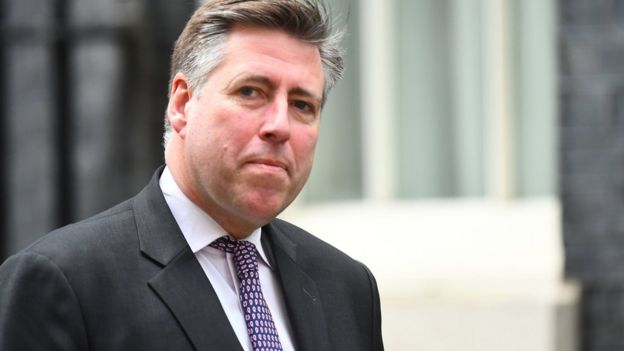
Sir Graham Brady
Pic-Sir Graham Brady did not rule out running as Mrs May's successor/pa
Political reporter(wp/bbc):::
Prime Minister Theresa May could set a date for her resignation in the coming days, the chairman of the Conservative backbench 1922 Committee has said.
The PM said she will step down when her Brexit deal is ratified by Parliament - but some MPs want a fixed date.
Sir Graham Brady said he expects a "clear understanding" of that timetable once she has met the committee, which she will do on Wednesday.
Sir Graham also refused to rule out running himself to replace Mrs May.
Speaking to BBC Radio 4's The Week in Westminster, he said the 1922 Committee had asked her to give "clarity" about her plans for the future, and she had "offered to come and meet with the executive".
He continued: "It would be strange for that not to result in a clear understanding [of when she will leave] at the end of the meeting."
The 1922 Committee is an elected body of Tory MPs that represents backbenchers and oversees the party's leadership contests.
On why the PM had so far been unwilling to set a date to step down, Sir Graham said: "I do understand the reticence about doing it.
"I don't think it's about an intention for staying indefinitely as prime minister or leader of the Conservative Party.
"I think the reticence is the concern that by promising to go on a certain timetable, it might make it less likely she would secure Parliamentary approval for the withdrawal agreement, rather than more likely."
When quizzed about running for the party leadership, Sir Graham said: "It would take an awful lot of people to persuade me.
"I'm not sure many people are straining at the leash at the moment to take on what is an extraordinarily difficult situation."
In March, Mrs May pledged to stand down if and when Parliament ratified her Brexit withdrawal agreement, but did not make it clear how long she intends to stay if no deal is reached.
Pressure has grown on her since the Tories' local election drubbing, and there have been warnings the party faces a meltdown in elections to the European Parliament as well.
The UK had been due to leave the EU on 29 March, but the deadline was pushed back to 31 October after Parliament was unable to agree a way forward.

Friday, 10 May 2019

Parents boycott Sats tests at Bealings primary school

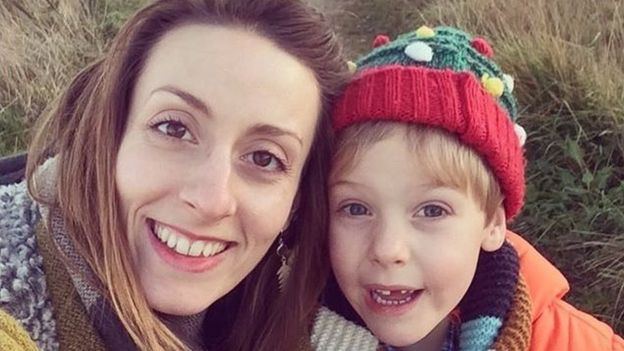
Lavinia Musolino with Enzo

Pic-Lavinia Musolino has opted for her son Enzo, seven, not to take the Sats test
Education(wp/bbc):::
A class of primary school pupils will not sit Sats tests after their parents chose to boycott the exams.
All 15 parents of children in Year 2 at Bealings School near Woodbridge, Suffolk, said "over-testing was ruining the pupils' education".
Heather Chandler, one of the parents, said it was "far too early" for the children, aged six and seven, to be tested.
The school said it did not want to comment.
Chair of governors Rick Gillingham said they would not stand in the parents' way and "over-testing is certainly something we wouldn't go along with".
Ms Chandler said the Sats were unnecessary and a waste of time.
"At that age they should be out playing and investigating the world around them, not being taught to do a test," she said.
"It adds extra pressure they don't really need and takes a lot of teachers' time away from what they should be doing."
Lavinia Musolino, whose seven-year-old son Enzo is in Year 2, said: "It's a really positive way to stand up to the current government and say we don't agree."
The Standards and Testing Agency tests are formal national curriculum exams in primary schools in England, taken by children twice - first in Year 2 and then in Year 6. Pupils are tested in maths and English.
Last month, Labour leader Jeremy Corbyn announced he would scrap Sats if his party came to power, saying the move would help improve teacher recruitment and retention.
Instead, Labour would introduce alternative assessments which would be based on "the clear principle of understanding the learning needs of every child," he said.
But Schools Minister Nick Gibb said abolishing Sats would be "a retrograde step".
He said it would "keep parents in the dark" by preventing them from knowing how good their child's school was at teaching maths, reading and writing.
The government has already said it wants to phase out Sats for seven-year-old pupils in favour of a new baseline assessment for reception classes.

UK, EU to agree free-trade deal, October 31 Brexit date in doubt - Reuters poll

Political reporter(wp/reuters):::
Britain will eventually leave the European Union and agree a free-trade deal with the bloc, according to the vast majority of economists polled by Reuters who were, however, split on whether the two sides would divorce on Oct. 31.
Prime Minister Theresa May failed to get her Withdrawal Agreement ratified by the British parliament on three attempts so the EU allowed a Brexit delay until the end of October, giving May time to try to convince lawmakers to reach agreement.
When asked if the latest deadline - delayed from March 29 - would be extended, 17 of 33 economists who answered an extra question in the May 3-10 Reuters poll said it would not.
“Failure to come to an agreement runs the risk that the EU will simply lose patience in October and not grant any extension,” said Peter Dixon at Commerzbank.
“We are by no means out of the woods.”
It’s nearly three years since the June 2016 referendum when Britons shocked much of the world and voted to leave the EU but it is still unclear how, when, or even if it will ever quit the club it joined in 1973.
But the median forecast in the latest survey gave the chance of a disorderly Brexit - where no deal is agreed and an outcome Reuters polls have repeatedly said would be harmful to both sides - at 15%, as it was in March and April.
Only one of 50 respondents gave a probability above 50%.
Still, as they have in all Reuters polls since late 2016 most economists said the two sides would settle on a free-trade deal. The second most likely outcome was again Britain as a member of the European Economic Area, paying into the EU budget to maintain access to the EU’s single market.
In third spot was Brexit being cancelled - once more ahead of Britain leaving without an agreement and trading under World Trade Organization rules, which came last.
“All options remain on the table in the UK, including no Brexit, a hard Brexit and even another extension beyond October,” said Kallum Pickering at Berenberg.

WILL THEY, WON’T THEY?

Britain avoided the recession predicted in the event the country decided to leave the EU and the median chance of one in the next year was only 20%, down from 25% given last month. For the next two years, the probability was an unchanged 25%.
However, growth is expected to remain tepid and the world’s fifth largest economy will grow 0.2-0.4% per quarter across the forecast horizon, from here through to the end of 2020, unchanged from last month’s poll.
Inflation, however, is expected to rise and will average 1.9% this year and 2.0% in 2020 and 2021 - matching the Bank of England’s target - the poll found.
Yet the central bank is unlikely to do much with monetary policy. Monetary Policy Committee member Michael Saunders said in an interview published on Thursday the BOE was unlikely to raise interest rates far or fast, even if the economy picks up after a smooth Brexit.
Economists largely agreed with Saunders and medians suggests borrowing costs will rise 25 basis points early next year, taking Bank Rate to 1.00%. That call was on a knife edge, with just over half expecting it to come in the first quarter.
It will be 2021 before another 25 basis points are added, the poll found, and two economists have pencilled in a cut to Bank Rate next year.
“With CPI inflation – which stood at 1.9% in March – yet to reflect higher labour costs, it is not surprising that the MPC is in no rush to raise rates,” said Ruth Gregory at Capital Economics.

William, Kate, Harry and Meghan launch mental health text line

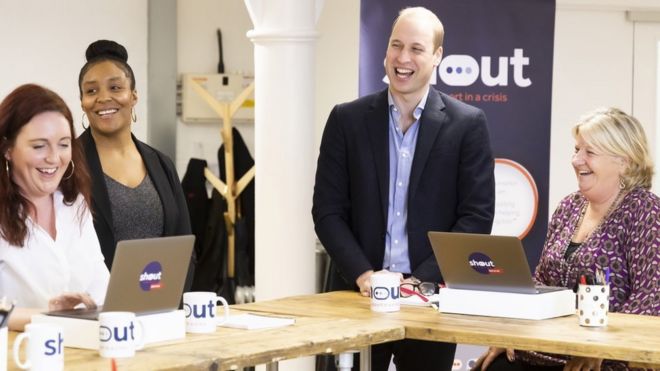
The Duke of Cambridge meets Shout volunteers

Royal correspondent(wp/bbc):::

The Duke and Duchess of Cambridge and the Duke and Duchess of Sussex have teamed up to launch a text messaging service for people experiencing a mental health crisis.
William, Kate, Meghan and Harry have backed the initiative, called Shout, with £3m from their Royal Foundation.
The free, anonymous service connects people experiencing a "tough moment" with trained volunteers.
Prince William appealed for more people to work as a volunteer for Shout.
He said they were all "very excited" about the initiative.
"It provides instant support," he added. "You can have a conversation anywhere and anytime - at school, at home, on the bus, anywhere."
During a 12-month pilot last year, 1,000 volunteers signed up to the initiative run by the charity Mental Health Innovations and 60,000 conversations took place.
"That is 60,000 moments when people who were feeling scared, frightened and alone were able to use their phone to connect with someone who could support them," Prince William said at a launch event at Kensington Palace.
The service aims to help people experiencing problems - from suicidal thoughts to bullying and relationship issues - move from "crisis to calm".
The Duchess of Cambridge said: "For the last few years, I've been focusing much of my work on the importance of prevention in the earliest years of life to help avoid problems in later life.
"But, sadly, for so many, they have already reached a crisis situation."


Kate added that Shout offered crucial support and "the opportunity to turn lives around".
Shout was researched and developed by the Royal Foundation, a charity which the royal couples set up together.
The service operates 24 hours a day, seven days a week and is modelled on the US-based Crisis Text Line, which was launched in August 2013.
The volunteers are supported by clinically trained supervisors. They need to be over 18, complete 25 hours of online training and commit to between two and four hours volunteering each week.
Lorraine Heggessey, the Royal Foundation's chief executive officer, said the "innovative solution" helps tackle "one of today's biggest challenges - the increasing number of people needing mental health support".
The Institute of Global Health Innovation (IGHI) at Imperial College London will also work with the project to identify trends and develop insights into mental health to shape the provision of services.
The royals have already been campaigning around the issue and in 2016 launched their Heads Together campaign to end the stigma around mental health.

Fashion chain Select falls into administration

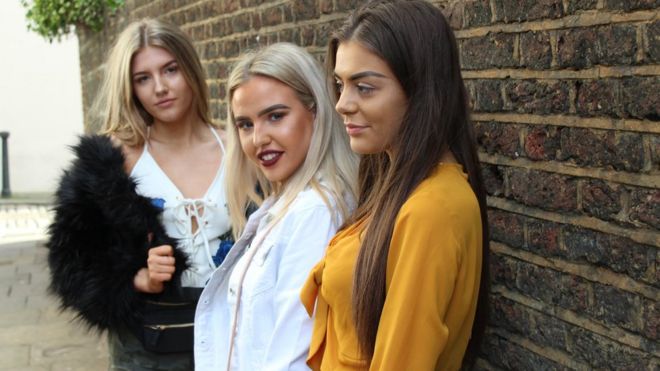
Select models
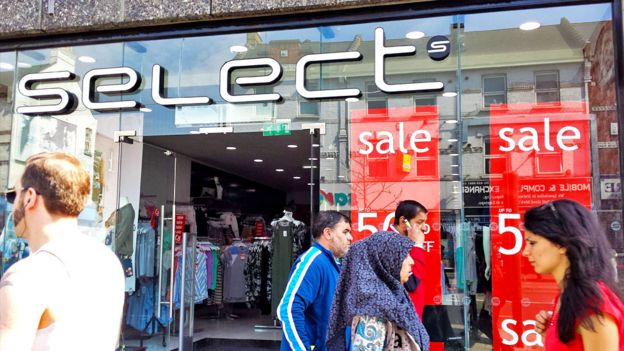
Select store
Business reporter(wp/bbc):::
Fashion chain Select has fallen into administration, putting 1,800 jobs at risk at its 169 stores across the UK.
The firm, which targets women aged 18-45, has been struggling despite having struck a deal in April last year that cut rents at its stores.
Select's administrators said stores would continue to trade while all options for the business were assessed.
A host of High Street retailers have run into trouble recently as spending patterns change.
Select is owned by Turkish entrepreneur Cafer MahiroÄŸlu, who himself bought it out of administration in 2008.
Last year, the retailer - which has annual sales of £77m - used a process called a company voluntary arrangement (CVA) to negotiate rent cuts of up to 75% from its landlords.
However, business advisory firm Quantuma, which has been appointed as administrators to Select, said "prevailing High Street conditions" meant the turnaround plan the chain had tried had not succeeded.
"We will continue to trade Select whilst we assess all options available to the business, with the aim of achieving the optimum outcome for all stakeholders," said Andrew Andronikou, joint administrator at Quantuma.
"Options include a sale of the business, in addition to entering into discussions with those parties who have already expressed interest in acquiring the business."
Maureen Hinton, global retail research director at market research firm GlobalData, said the chain was in "a difficult place in the market, competing directly with very strong brands such as BooHoo and Primark, as well as the supermarkets".
"It's not a big destination retailer and it's simply not selling enough. There's already over-supply in the market for the demand," she added.
"When you're competing on such low prices then the margins are very tight."
Select's administration is just the latest piece of bad news for the UK's High Streets, which have suffered as consumers increasingly do their shopping online.
Several high-profile names have fallen into administration or used a CVA process, which can be used to close stores and allow for rents to be renegotiated at outlets that remain open.
On Thursday, creditors at struggling department store chain Debenhams backed a CVA plan that will see the closure of 50 stores and rent reductions at other outlets.
Last year, House of Fraser fell into administration before being bought by Mike Ashley's Sports Direct.
In March, fashion chain LK Bennett called in administrators. The chain was bought last month, but 15 of its 36 stores were closed.
Sir Philip Green's Arcadia Group, which owns Topshop and Dorothy Perkins among others, is also reportedly seeking a CVA.

School break times 'cut short to cram in more lessons'

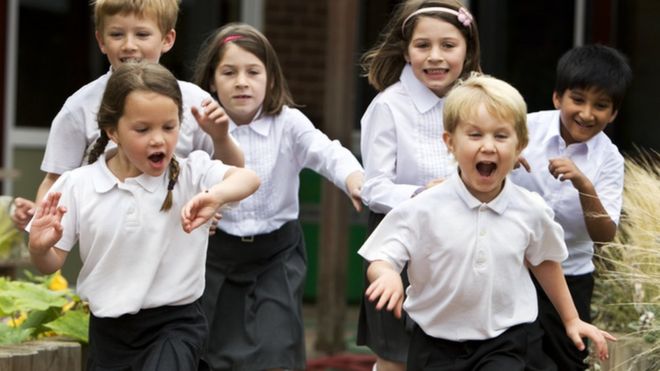
School children enjoying break-time
Education(wp/bbc):::
School break times have been getting shorter over the past two decades, as teachers try to pack more lessons into the day, a long-term study suggests.
Infants in England had 45 minutes less break time a week than in 1995, the University College London team found.
Secondary pupils had lost 65 minutes over the same period, they said.
The government said it had given schools the "autonomy" to make decisions about the structure and duration of their school day.
Pupils complained of fun activities being banned, not having enough time to eat their lunch, and missing their breaks due to others' poor behaviour.
Children and young people's social lives seem to have been curtailed as well, with fewer students than in 2006 reporting they had visited a friend's house after school, according to the research.
Playing video games and watching television had overtaken spending time with friends as the most common after school activity, the study found.
The researchers said this finding highlighted how "school is increasingly the main, and in some cases the only, context where young people get to socialise".
Researchers analysed questionnaires completed at 993 primaries and 199 secondaries in 2017 along with separate pupil surveys at 37 schools.
These were compared with surveys in similar schools in 2006 and 1995.
The team said their results gave the impression that breaks were being kept as "tightly managed and as short as possible" and this meant pupils could be missing out on social development.
Lead author Ed Baines, from UCL's Institute of Education, said: "Despite the length of the school day remaining much the same, break times are being squeezed even further, with potential serious implications for children's wellbeing and development.
"Not only are break times an opportunity for children to get physical exercise - an issue of particular concern given the rise in obesity - but they provide valuable time to make friends and to develop important social skills, experiences that are not necessarily learned or taught in formal lessons."
The researchers found what they described as a "virtual elimination" of afternoon breaks, with only 15% of infant pupils and just over half of juniors having one.
In 1995, 13% of secondary schools reported an afternoon break period but in 2017 only 1% said they had one.
Lunch breaks had also been cut down, the team said, with 82% of schools setting aside less than 55 minutes in 2017, compared with 30% in 1995.
Nearly 60% of schools also withheld breaks from children when they or their classmates had been poorly behaved or needed to complete work.

'Well-being'

Head teachers' leader Geoff Barton said there was enormous value in unstructured free time for children to socialise and let off steam but schools had to balance this consideration against all the other demands expected of them.
The Association of School and College Leaders' general secretary said: "The fact is that school timetables are bursting at the seams because of the pressure to deliver a huge amount of learning and to prepare children for high-stakes tests and exams.
"It is therefore no surprise that school break times are shorter than they were 20 years ago.
"This may be regrettable but it is the result of a conscious decision by successive governments to expect more of schools."
A Department for Education spokesman said the government recognised the importance of physical activity in schools "to improve both physical and mental wellbeing".
"We are clear that pupils should be given an appropriate break and we expect school leaders to make sure this happens," he added.